
From competitive pinball and pickleball to plastic art and plants, discover the pastimes that keep Goizueta faculty and staff hooked.
At Goizueta Business School, we spend a lot of time talking about what people do at work. But ask our faculty and staff what they do when they’re not working, and the answers can be every bit as revealing.
Some head offshore in search of the perfect catch. Others train for a bodybuilding cosplay event, compete in pinball championships, tend plants, or turn plastic into art. The range is as unexpected as it is varied. While the activities are wildly different, many of the qualities behind them sound surprisingly familiar at a business school: curiosity, persistence, and a willingness to keep learning—even when you’re very much a beginner (and sometimes, the learning curve is steep enough that the hobby is thriving more than the hobby-houseplants are).
Why Hobbies Matter
For Marina Cooley, assistant professor in the practice of marketing, that connection between our working lives and our lives outside of work has become a particular area of interest. Cooley teaches Goizueta’s Happiness Blueprint, has studied work-life balance in Denmark, and chronicles her own experiments with hobbies and intentional leisure through her Prof Off Duty Substack community. After trying 17 different hobbies herself, she has become an enthusiastic advocate for making room for interests that have nothing to do with our jobs. She is also working on a book about hobbies, tentatively slated for publication in September 2027.
Cooley says people often get the relationship between hobbies and balance backward:
“Very often, people I know will tell me they want to get a hobby just as soon as they find balance at work. But it’s getting the hobby that gives you balance. You’ll define your boundaries: as a worker, as a parent and as an individual. Hobbies give us that third identity that buffers us from the unexpected hurdles of life.”
So, what do the people of Goizueta do when they’re off duty? Meet some of the faculty and staff—and the hobbies that keep them learning, creating, moving, competing, connecting, and having fun.
Mildred Meza: Start:ME Program Associate
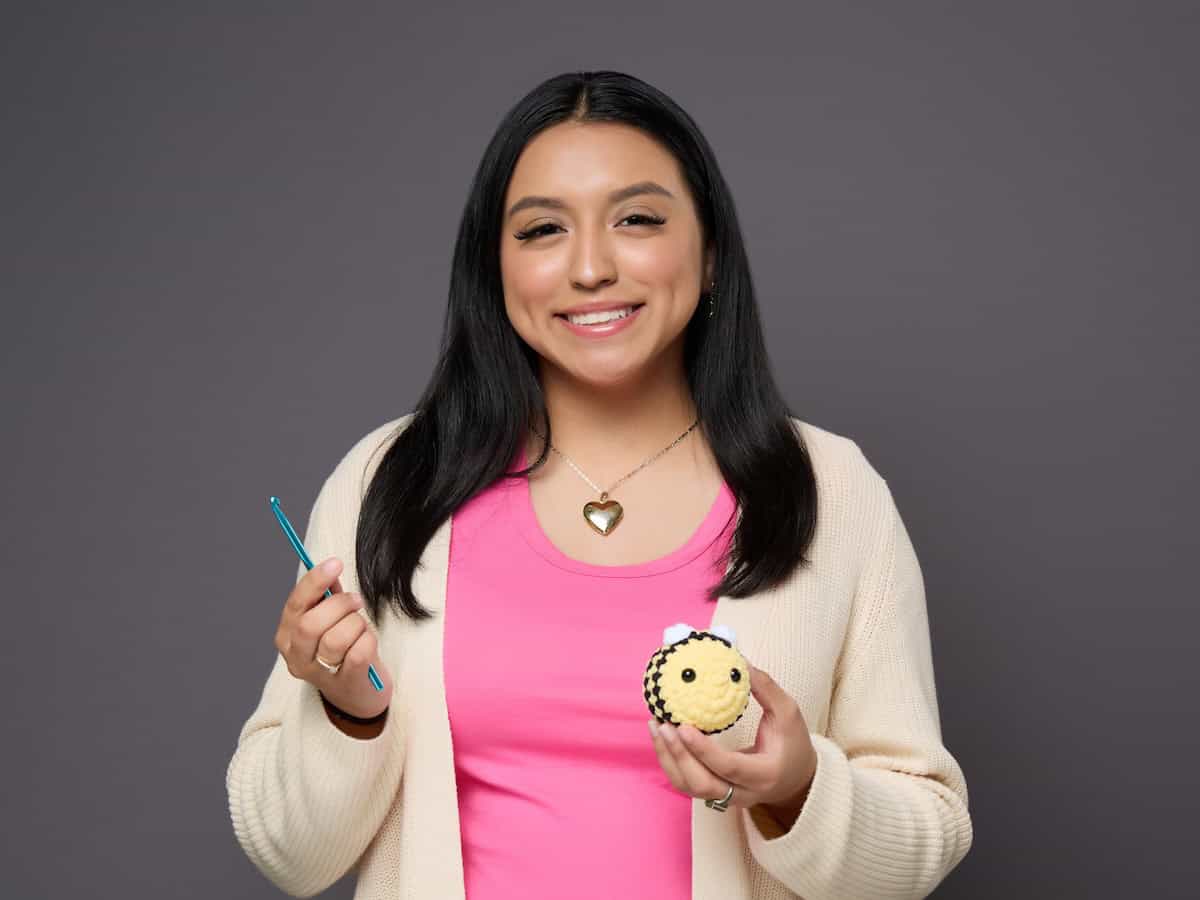
Hobby: Crochet! I’ve been crocheting since 2020.
How did you get into this hobby?
Crochet was one of the hobbies I picked up during the pandemic. My mom had tried to teach me how to crochet for years, but it wasn’t until I was stuck at home and bored that I finally decided to learn. Once I got the hang of it, I was hooked!
How deep down the rabbit hole have you gone?
I turned it into a business! I don’t make the traditional hats, scarves, or beanies people expect. I make crochet plants, flowers, animals, plushies, and other whimsical things. I’ve gotten to the point where I can even crochet without looking at my work, which is very useful for multitasking!
What’s your proudest hobby-related accomplishment?
I was interviewed live on FOX 5 Atlanta about my crochet work. It was really cool to see something that started as a pandemic hobby grow into a small business and lead to opportunities like that.
Stephanie Adams: Senior Associate Director, Academic Affairs & Instructional Design
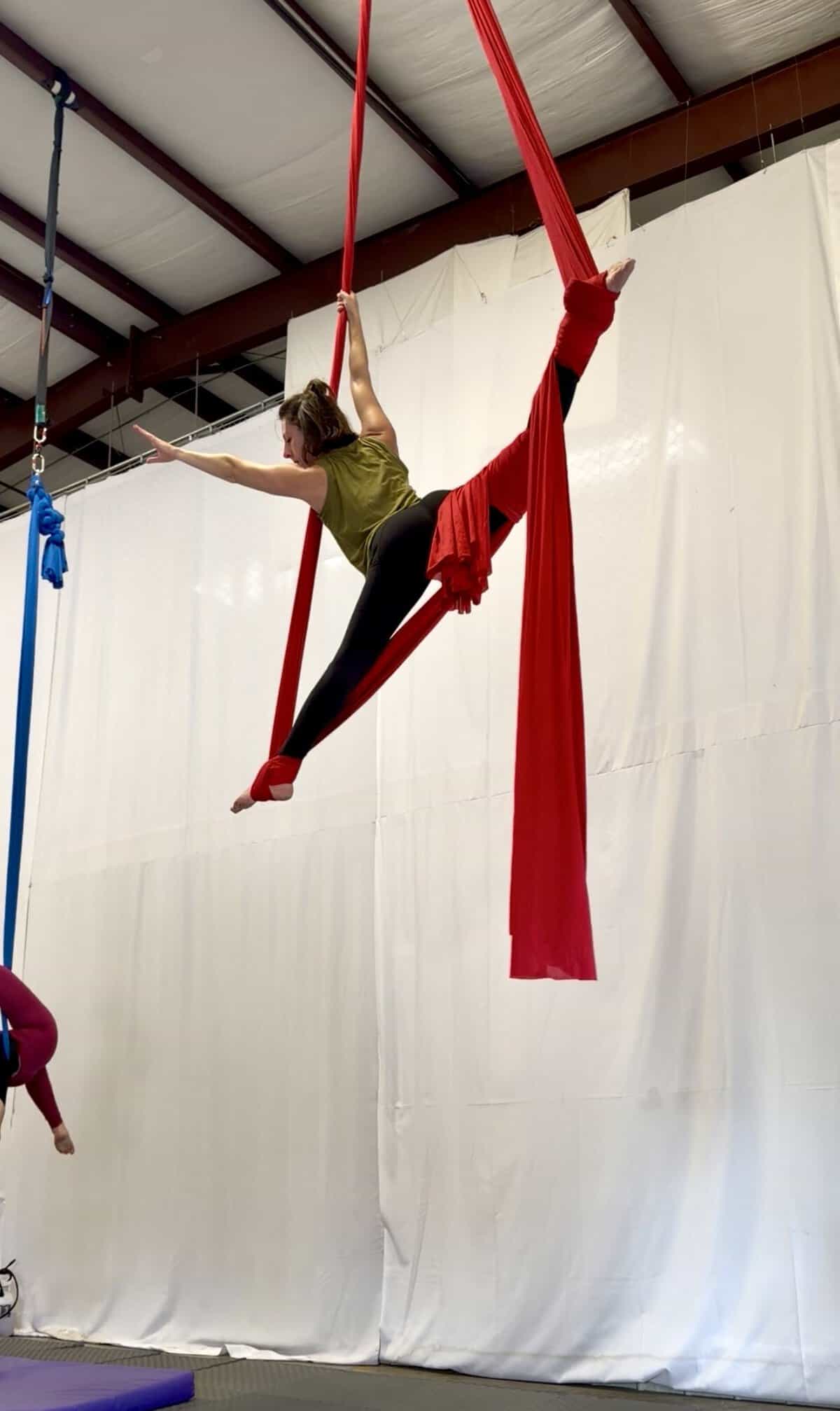
Hobby: Aerial Silks, practicing since 2018
How did you get into this hobby?
After I completed my first yoga teacher training, I became very involved in acroyoga (acrobatic partner yoga). The studio where I practiced also offered classes in aerial arts, including aerial silks, lyra, rope, and trapeze. I signed up for silk tails and have been hooked ever since my very first class.
What is something about your hobby that outsiders usually don’t know or understand?
Most people think aerial silks require superhuman upper-body strength and flexibility. I’d argue that grip strength and core conditioning are much more important than being able to do pull-ups or splits. The reality is that beginners of all body types and ages can start. Just like any sport, progressing takes practice and commitment.
Another common misconception is about the fabric itself and the worry that it might break under someone’s weight. Professional aerial fabric and rigging are designed to hold thousands of pounds. This is different from a yoga hammock, which has a lower weight limit. Aerial silks are specifically designed to absorb drops, momentum, and force during dynamic movements.
And despite the name, aerial “silks” are actually made from a heavy-duty nylon tricot. The fabric offers a combination of strength and moderate stretch while still feeling soft against the skin and providing a comfortable grip.
What’s your proudest hobby-related accomplishment?
I began training in 2018, but in 2020, COVID hit and my studio closed. Then, in 2022, I became a first-time mom. For almost five years, I had stepped away from a hobby that brought me incredible joy.
When I eventually found a new studio, I wasn’t sure if stepping back into aerial silks in my 40s was going to work. Turns out, it did. I’m really proud that I found my way back to something that I love. I’m also really excited to have my son at my next performance.
Has your hobby taught you anything that carries over into your work?
Absolutely. Practicing aerial silks requires deep trust—in yourself, your equipment, and your coach. It also normalizes practice and failure as necessary steps toward mastery.
Both trust and humility are skills I carry with me into my work. You have to be willing to try something, sometimes fail at it, learn from the experience, and try again. And sometimes, you have to trust yourself enough to get a little bit outside your comfort zone.
Brian Mitchell: Associate Dean, Full-Time MBA Programs; Goizueta Global Strategy & Initiatives
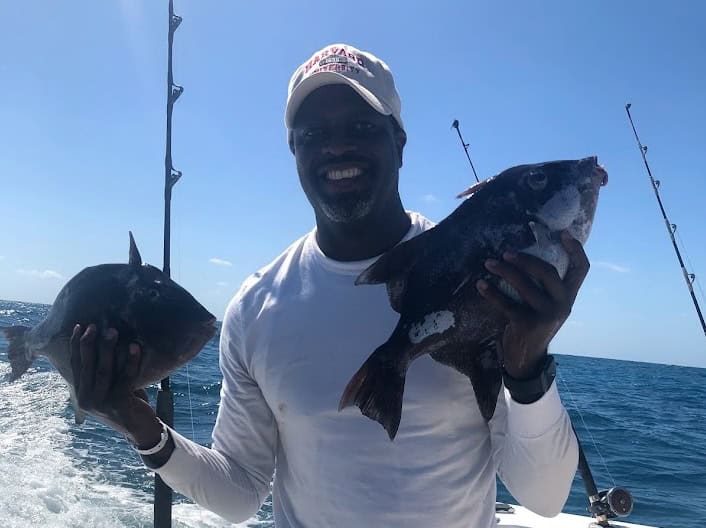
Hobby: Deep sea fishing for about 20 years.
What would your Goizueta colleagues be most surprised to learn about this side of you?
Most people know me as a city guy. I’m from Chicago. I live downtown in Atlanta. I do not generally enjoy being out “in nature” 😊. I don’t even like going OTP to the suburbs! So me being a hundred miles offshore in the open ocean might be something my Goizueta colleagues have a hard time imagining. But there’s something about the water that is calming. And then suddenly completely chaotic when a fish is on the line. I love it more than I ever thought I would.
What’s the funniest, strangest, or most memorable thing that’s happened while pursuing your hobby?
Fishing off of the coast of Puerto Vallarta, Mexico, I almost accidentally got the line caught by a humpback whale. The boat captain was alert enough to cut the line before the whale could have taken the entire boat for a dive! It was definitely the most memorable of my fishing experiences…and funny now that I know we survived!
How deep down the rabbit hole have you gone?
I now build deep sea fishing into my annual calendar with the goal of going twice a year. Every year I fish in Panama (either the Caribbean or Pacific side), and every year I try to fish somewhere new. The Indian Ocean and the South China Sea are my “Bucket List” fishing spots!
Has your hobby taught you anything that carries over into your work or life at Goizueta?
There are definitely some parallels between deep sea fishing and working at Goizueta. The ebb and flow of the experience is very much like a day at the business school. Just when it’s smooth and quiet for a few hours, something hits the line and it’s all hands on deck! Most of the day is taken up by one or two challenges that require focus, energy, and attention.
Tucker Balch: Professor in the Practice and Research of Finance
Hobby: Making art with plastic. I’ve been doing it for 50 years.
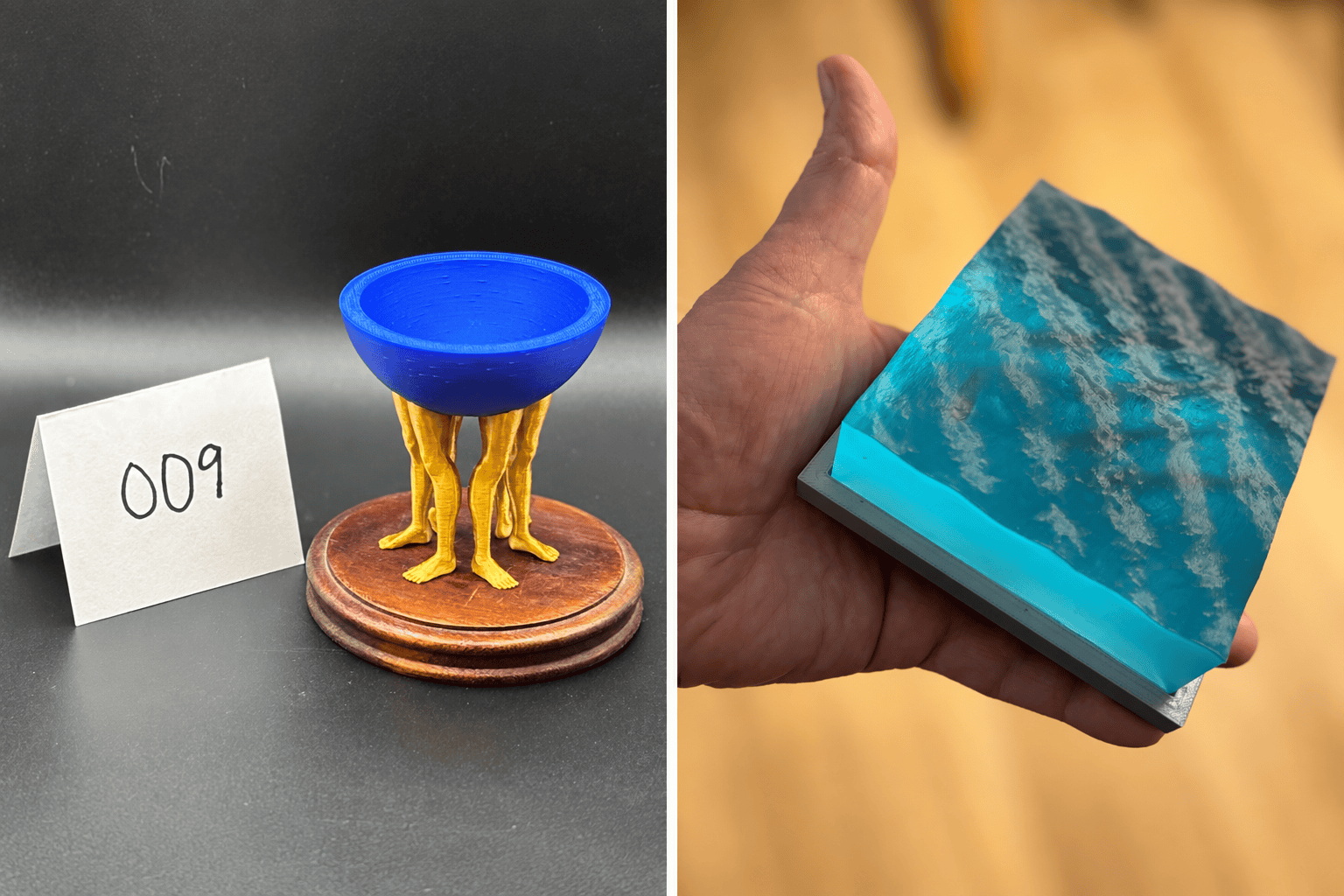
Pictured on the left is “Leg Bowl” 3D printed PLA plastic. This is a whimsical piece that combines a 3D model of legs printed in gold with a blue bowl for storing keys or change.
On the right is “Anna Maria Island” Molded epoxy resin, 3D printed PLA plastic, and fishing lures. This piece is meant to evoke a feeling of being on the water near Anna Maria Island, Florida fishing for giant tarpon. If you look closely you can see a “pod” of 5 fish just under the surface. I used AI to write a program that models ocean waves, then used that model to create a silicone mold. I used photos of the water in Florida to match the color.
How did you get into this hobby?
In 6th grade I had an inspiring biology teacher. As part of the class she showed us biological specimens embedded in clear plastic. I was fascinated, so I learned how to do it myself. When I graduated from elementary school I gave her a gift of a giant moth I caught and embedded in plastic myself.
Plastics have come a long way since then, opening more opportunities for creative expression. One of the most exciting developments I think is 3D printing.
What’s the funniest, strangest, or most memorable thing that’s happened while pursuing it?
Somebody offered me $10.00 for Leg Bowl. I wish I had taken it so I could say I was a professional artist.
Has your hobby taught you anything that carries over into your work or life at Goizueta?
As part of a course I taught here at Goizueta, I had the students create their own 3D printed objects. Some of them got hooked like I had.
Andrea Hershatter: Professor in the Practice of Organization & Management; Senior Associate Dean of Undergraduate Education
Hobby: Attending concerts
How did you get into this hobby?
I think there’s no greater joy than live music. I was a DJ on my college radio station and then ran marketing and produced the morning show on a rock station as my first post-MBA job. In fact, my MBA summer “internship” was working in a record store.
What’s the funniest, strangest, or most memorable thing that’s happened while pursuing it?
One of my greatest musician encounters was in college, when I got to interview the Ramones live on the air at WTUL in New Orleans.
How deep down the rabbit hole have you gone?
My husband and I go to at least a couple dozen concerts every year, not counting music festivals, which I also love. We are often outside the artists’ demo and in the 10% of oldest people at a show, but at some “geezer” concerts like the Rolling Stones and Eagles, we feel pretty young. And to this day, I own an insane amount of vinyl.
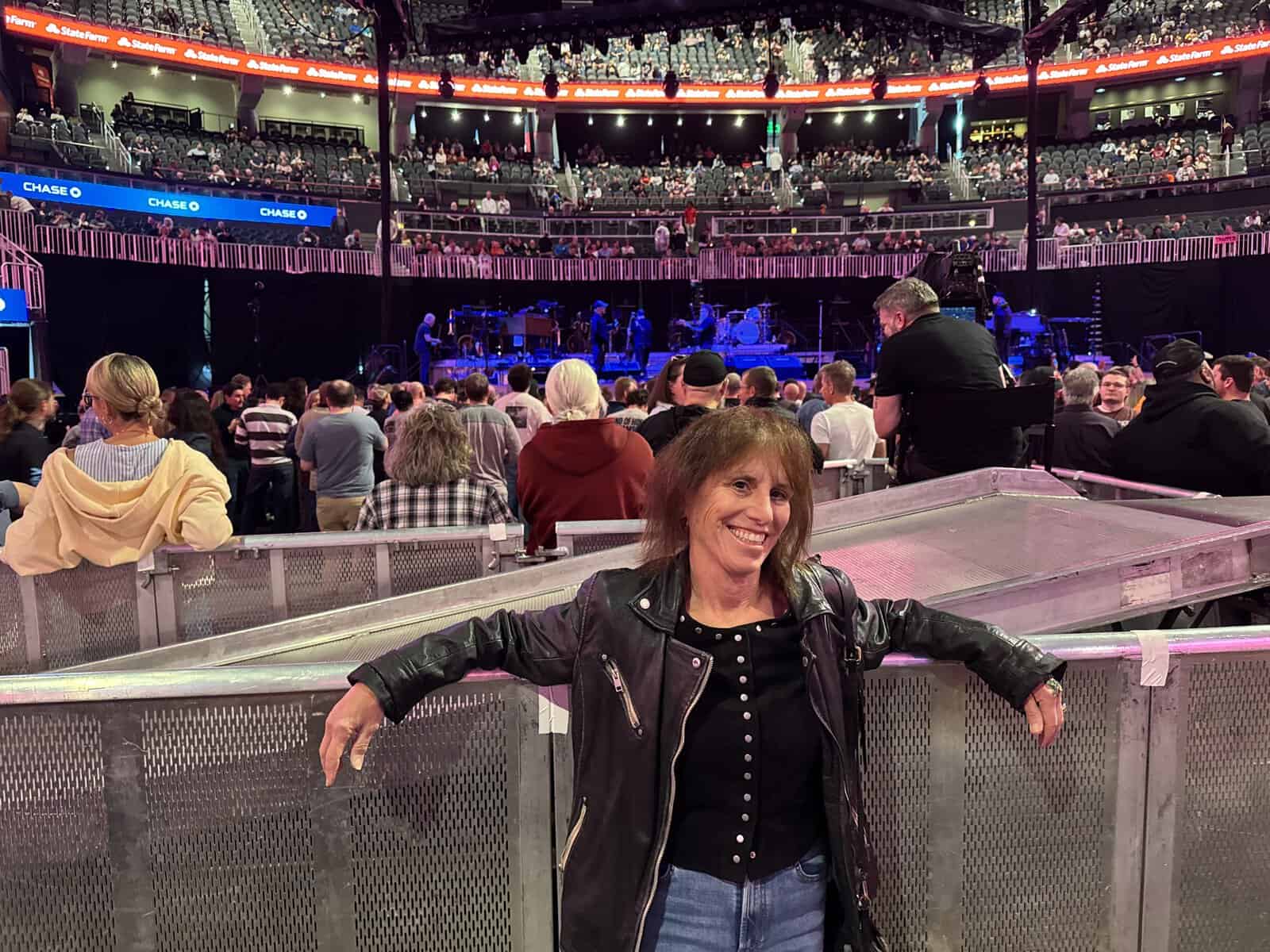
The photo above was taken earlier this year at Springsteen, who is now, and has always been, The Boss!
Erika Hall: Associate Professor of Organization & Management; Faculty Advisor, Business & Society Institute
Hobby: Pickleball — 4 years
How did you get into this hobby?
I took a pickleball class once and became addicted. I dragged my husband to one, and he similarly became obsessed. We then started partnering up to play mixed-doubles (man and woman team against another man and woman team).
How deep down the rabbit hole have you gone?
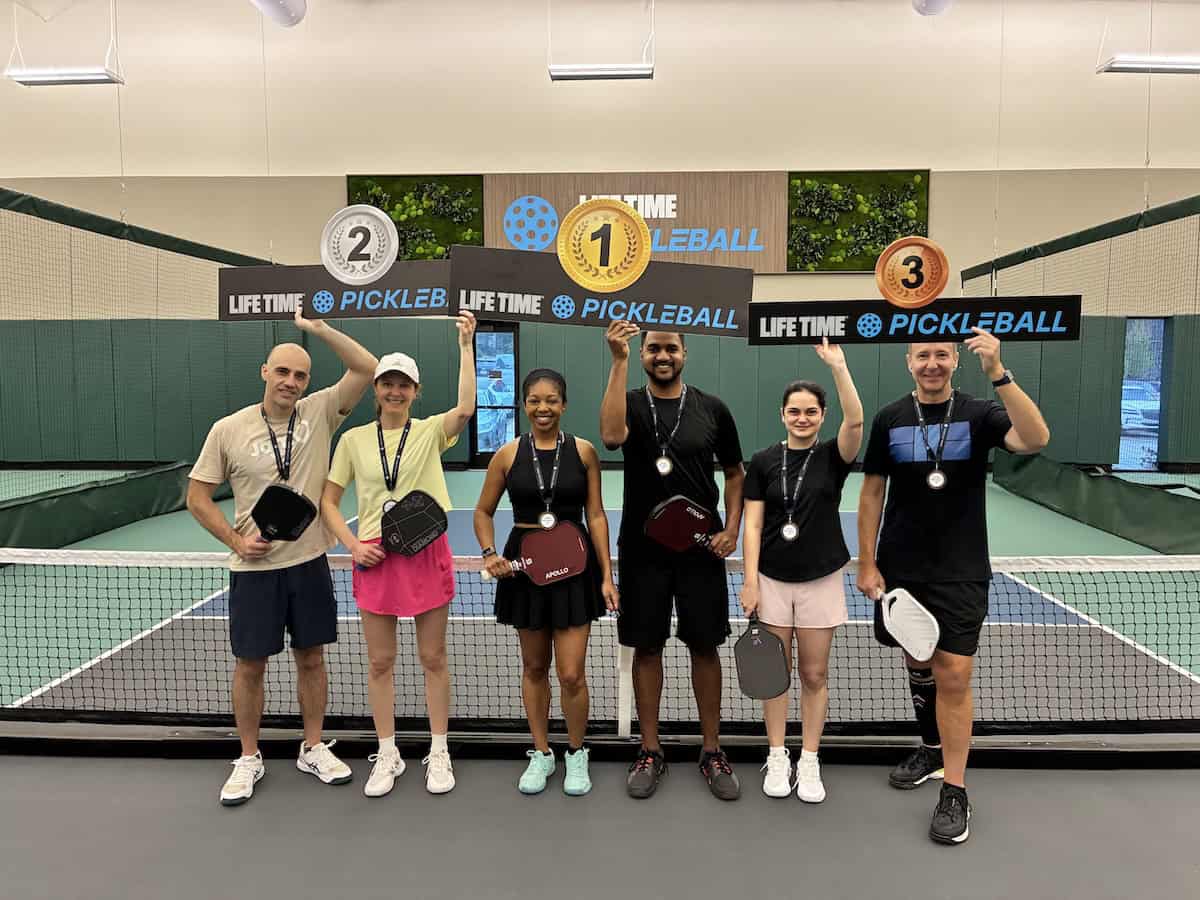
My husband and I compete in mixed-doubles tournaments and leagues. We even travel for them, having done a few PPA (Professional Pickleball Association) tournaments in Las Vegas, Nevada. We have several gold, silver, and bronze medals in our division, but even when we don’t place, we still have a great time and learn something from the experience.
What’s something about your hobby that outsiders usually don’t know or understand?
One of the coolest things about competing in this hobby is that you get to play alongside the pros. Amateur and professional pickleball players compete at the same tournaments, just in different divisions, so you can find yourself warming up on a court right next to some of the best players in the world. There’s something pretty amazing about Anna Leigh Waters, the best player in the world right now, apologizing to you because one of her out balls drifted onto your court during warm-up.
What’s your proudest hobby-related accomplishment?
Everyone, pickleballers included, thinks it’s wild that my husband and I can play together without arguing. Somehow, we’ve managed to stay competitive on the court while keeping the peace in our relationship, and that is, by far, my greatest pickleball accomplishment.
Michaela Foronda: BBA Program Director of Student Life and Leadership
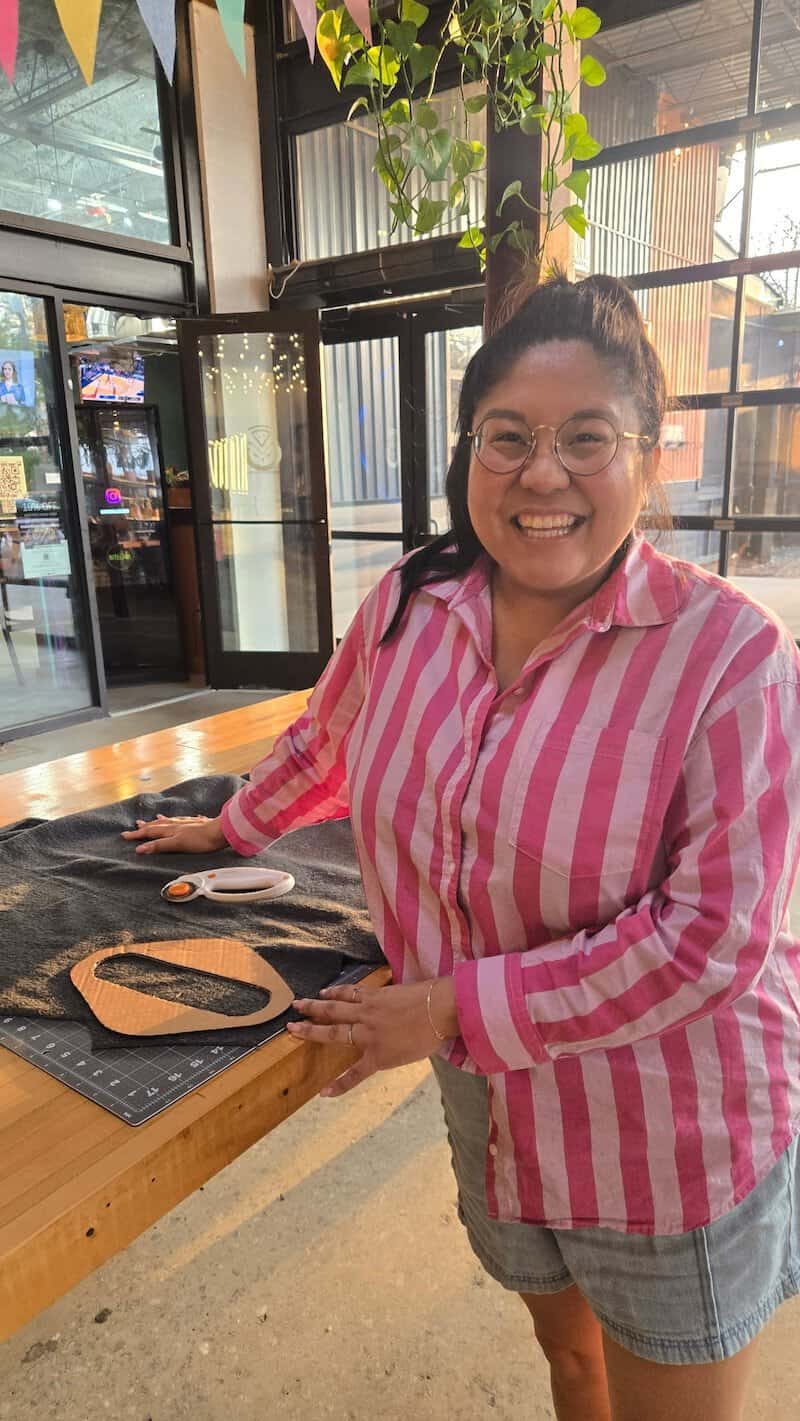
Hobby: Novice sewer meets party planner!
How did you get into this hobby?
In 2025, I decided to relearn how to sew and soon realized I could turn a personal hobby into an opportunity for service. I applied for Oxford College’s Board of Counselors Grant Funding to launch an initiative I coined “Pad Parties.” At these gatherings, participants learn to assemble and sew reusable menstrual pads in support of the mission of the PachaMama Project North America.
The PachaMama Project is a UK-based nonprofit that mobilizes sewers around the world to create reusable menstrual pads for vulnerable communities, with the ultimate goal of helping to end period poverty. The organization’s founder, Ella Lambert, generously shared a video with me that I use to introduce participants to the project and its mission. Since expanding to North America, U.S. contributions support Food Justice DMV.
What’s your proudest hobby-related accomplishment?
The grant has allowed me to host four Pad Parties since March 2025, bringing together community members with varying levels of sewing experience to learn from one another while contributing to menstrual equity. My next Pad Party is already in the works and is scheduled for November in partnership with Emory Cares.
Todd Wilson: Associate Director, Graduate Student Advising and Programming
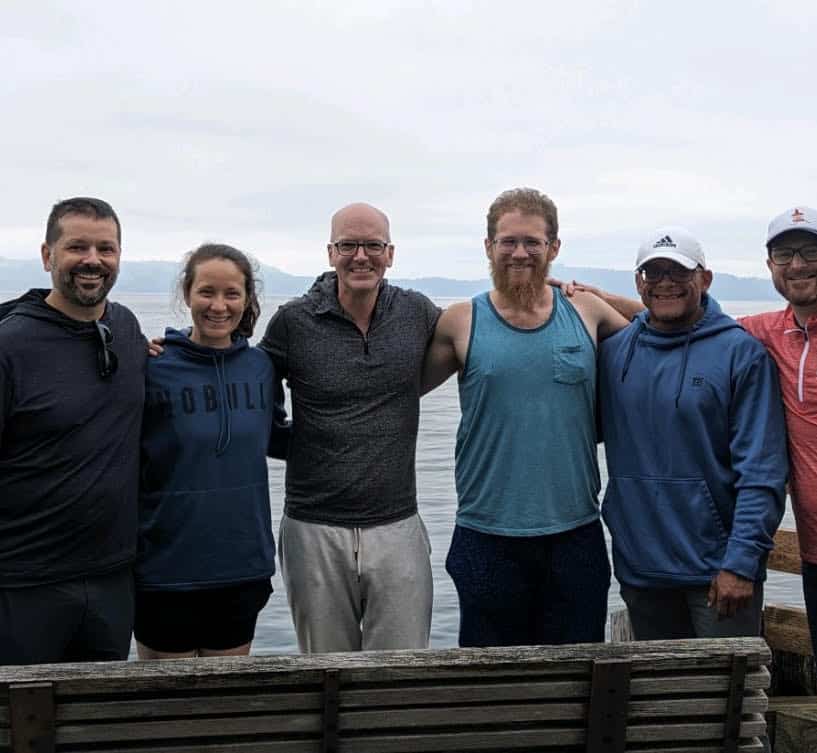
Hobby: Long Distance Relay Racing
How did you get into this hobby?
I started by running the Chattanooga-to-Nashville Ragnar Relay Race with friends and customers of mine from my old job several years ago, then joined a new group of friends to do similar races in Minnesota, Michigan, Kentucky, and Oregon (including the famous Hood To Coast relay). We’re doing the Blue Ridge Relay from Virginia to Asheville this year.
What would your Goizueta colleagues be most surprised to learn about this side of you?
We travel from race leg to race leg in two vans, running around 200 miles total per team for each race (about 14-22 miles per runner for a team of 12), usually sleeping one night on the floor of a local high school gym or out in a field as our friends run their legs.
What’s the funniest, strangest, or most memorable thing that’s happened while pursuing your hobby?
Running four miles downhill, on a trail, in pitch black conditions at 4:30 am, below Mt Hood in Oregon
How deep down the rabbit hole have you gone? My team has a list of the best portable bathroom companies (Honey Bucket is the clear winner—they even have a Spotify playlist).
Mehrnaz Zanganeh: Office Manager for the Goizueta PhD Program
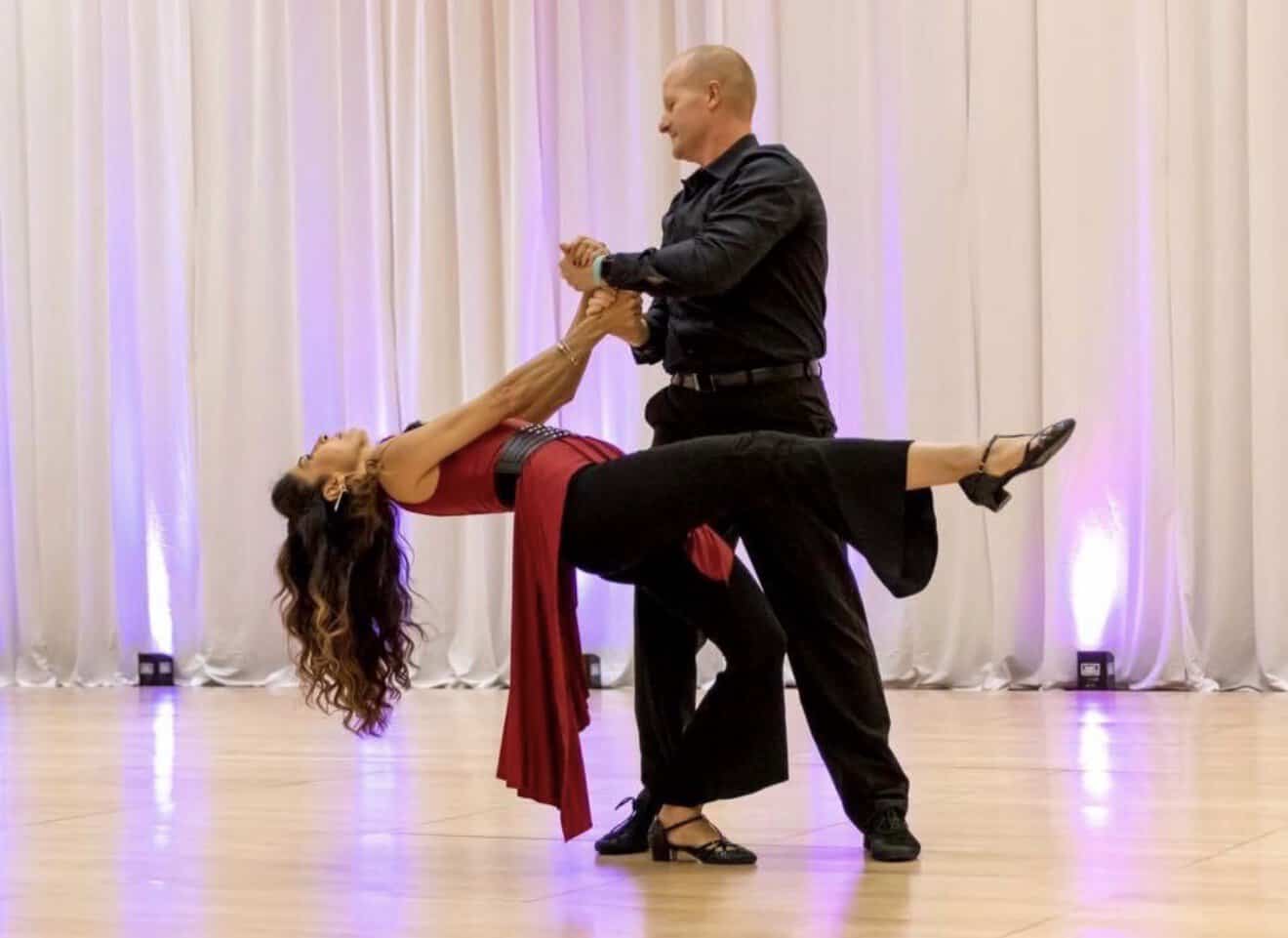
Hobby: Outside of work, one of my biggest passions is dance, especially West Coast Swing (WCS).
My journey into dance started during a difficult chapter of my life. When I was going through a five-year divorce process, I felt like I needed something completely new—something that would get me out of my head, give me something to look forward to, and help me meet new people outside the circle of my marriage. I decided to learn how to dance.
I spent about a month trying a few different styles, including ballroom and country dancing, before discovering West Coast Swing. Once I found WCS, I was hooked. There was something about the music, the connection between partners, and the fact that the dance is improvised rather than simply following a set routine that really grabbed me.
What started as a way to get through a stressful period of my life eventually became a major passion. I now travel for dance events and competitions, take private lessons and workshops, practice regularly, and compete in WCS at the Intermediate level. I still enjoy other styles of dance, but WCS is the only style I currently compete in.
And then there was the completely unexpected part of the story: I met my husband through dance!
At the time, I was living in Columbus, Ohio, and he was living in Atlanta. We had a seven-year long-distance relationship, traveling back and forth to see each other before I eventually moved to Atlanta to be with him. So, in a very unexpected way, dance also brought me to Atlanta.
There’s even an Emory connection: my husband worked for Emory at the Rollins School of Public Health for 22 years, so Emory has also been part of our story.
What would your Goizueta colleagues be most surprised to learn about this side of you?
Probably that I compete! One of the main WCS competitions I participate in is called Jack & Jill. Unlike a traditional choreographed competition, you don’t arrive with a predetermined partner or routine. You are typically matched with four different partners and have to dance together spontaneously to four different songs you may not have heard before.
You earn points through these competitions, and those points help you progress through the different levels. I currently compete at the Intermediate level, so there is always another level to work toward. I love that aspect because it gives me something measurable to work on while still keeping the dance spontaneous and fun.
I have also competed twice in choreographed WCS routines with my dance pro/coach, and I’m currently working on a third one. I’ve participated in several Flashmobs and group routines as well, which are completely different from competition but incredibly fun. More recently, I started working with another professional on a Country Two-Step showcase routine. That one is just for fun and performance… not competition. Apparently, once you start dancing, it becomes difficult to say no to another routine! 😂
How far down the rabbit hole have you gone?
Pretty far! I travel for dance events and competitions, take private lessons and workshops, and spend countless hours practicing. I’ve also learned a whole vocabulary that probably sounds completely foreign to non-dancers….musicality, connection, timing, anchor steps, patterns, styling, and many more.
But what I love most about West Coast Dance is the community and the wonderful friends I have made. You can travel somewhere knowing almost no one and, within a few songs, meet people from all over the country. There is a wonderful combination of social dancing, friendship, travel, and competition. We often become friends with dancers from different parts of the country and look forward to seeing each other at the next event.
Has your hobby taught you anything that carries over into your work or life at Goizueta?
Dance has taught me how to listen, adapt, trust, and recover when things don’t go according to plan. In an improvisational dance, you can’t control everything. You have to pay attention to your partner, respond in the moment, and keep moving even when you make a mistake.
It has also taught me patience. You can practice something over and over and feel like you’re getting nowhere, and then suddenly it clicks. I think that’s a lesson that applies well beyond the dance floor.
What’s your proudest hobby-related accomplishment?
I’m proud that something I originally started because I needed a change has become something that challenges me, brings me joy, pushes me outside my comfort zone, and has introduced me to an amazing community.
Getting on a competition floor and performing in front of judges and more than 600 other dancers is definitely intimidating, but I love challenging myself to learn, improve, and perform.
Molly Reininger: Assistant Director of Operations in Graduate Admissions
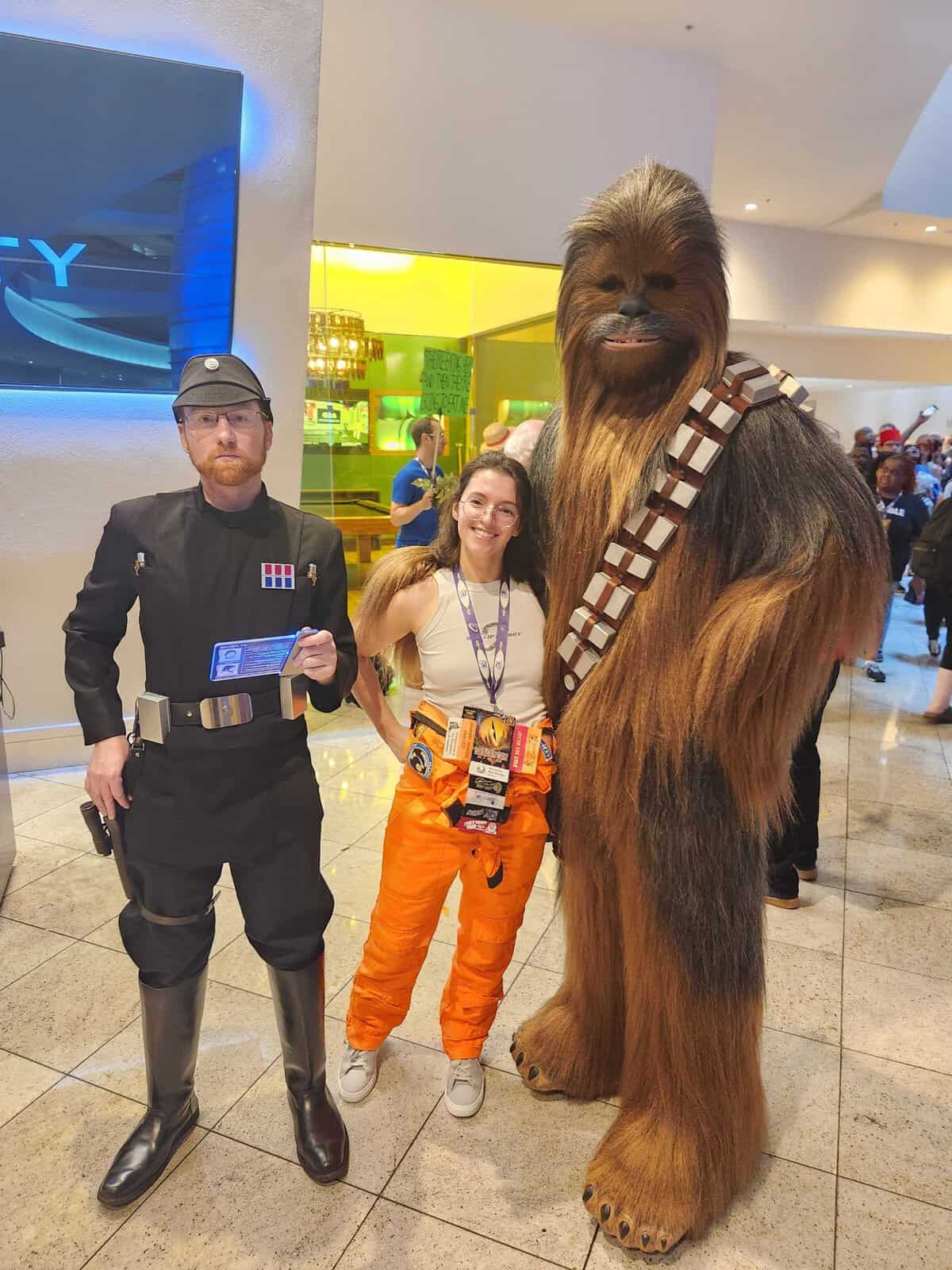
Hobby: Bodybuilding Cosplay
How did you get into this hobby?
I learned about the group from a friend who has seen them in person before, and I learned that the women’s portion was accepting applications for new members, so I figured I’d apply and give it a shot. Turns out I was the right fit and was granted permission to join!
What would your Goizueta colleagues be most surprised to learn about this side of you?
I think most would be surprised at my doing this at all, since I don’t really look the part of someone who is doing their best to learn to body build.
What’s the funniest, strangest, or most memorable thing that’s happened while pursuing your hobby?
Funniest thing is how confident I was about making the costume at the start of this journey. That was such a mistake; sewing is hard, fabric is hard, costuming is impossible. I’m two steps away from either hot glueing everything together and hoping it won’t melt off of me during the day or buying everything and making it look handmade. I had no idea making a simple costume would result in me pulling out my own hair in frustration! Kudos to all the professional costume makers out there—they’re so under appreciated.
What’s something about your hobby that outsiders usually don’t know or understand?
Bodybuilding is HARD. I didn’t know what I was getting into. Love the process, but the learning curve of how to be consistent and dedicated while also holding myself accountable was a steep one. And doing all this alone! I need to find a trainer or something.
Has your hobby taught you anything that carries over into your work or life at Goizueta?
Consistency in going to the gym (even when I can’t stand the idea) has helped me be consistent in my regular life as well. I also have more energy for everyday work-related tasks, and it gives me something to look forward to during the workday. Still somehow can’t stand cardio.
What’s your proudest hobby-related accomplishment?
Recently hit a new personal record for leg presses of 400lbs. Less glamourous than that but I also am a LOT better at lateral raises than I used to be.
Brenna Valentine: Assistant Director in the BBA Career Management Center
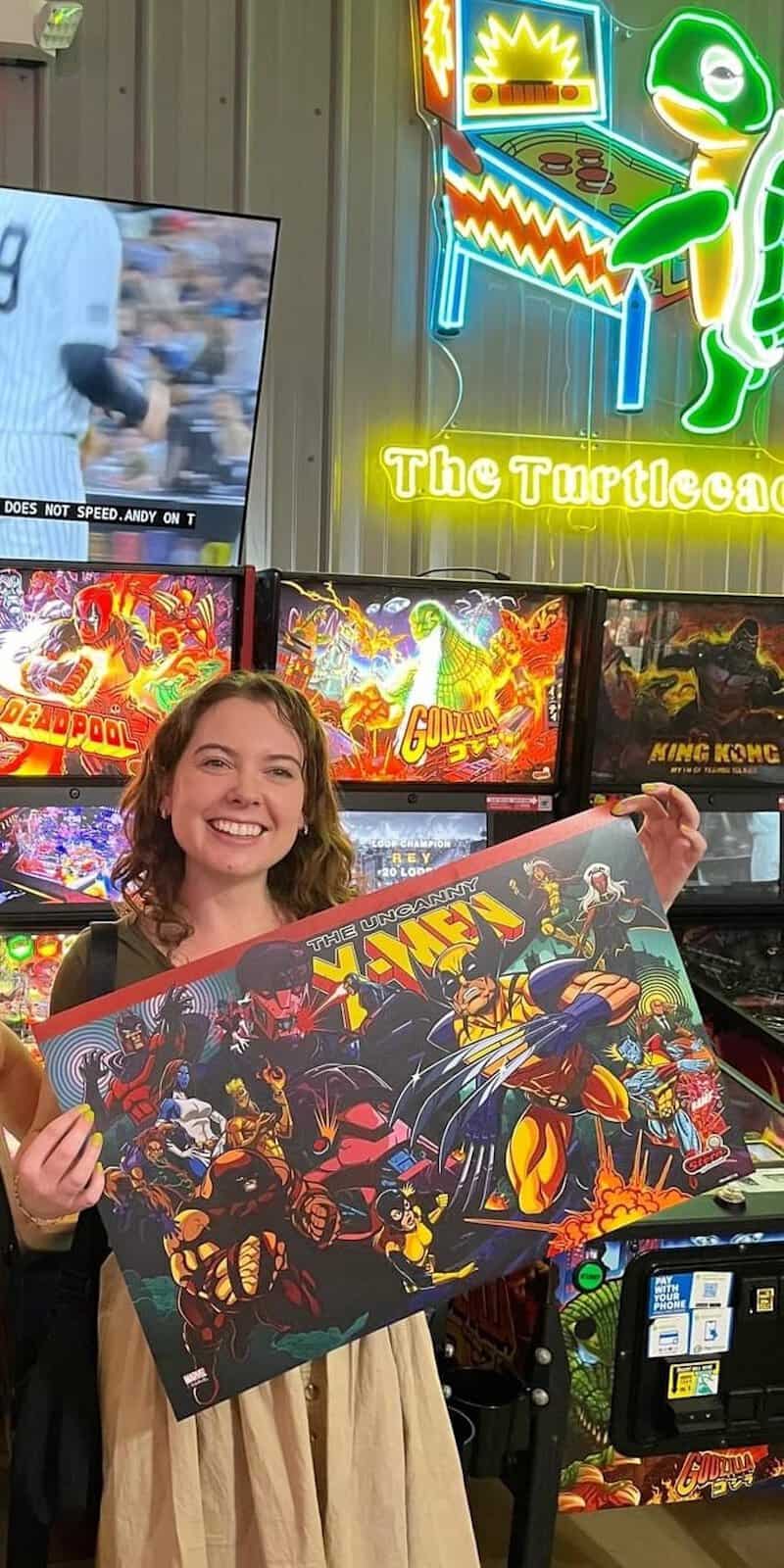
Hobby: Pinball! I have been playing pinball for about 10 years now, and playing competitively for about five.
How deep down the rabbit hole have you gone?
Last January, I made it to the Georgia State Women’s Pinball Championship! The top 16 players from the state are invited, and I ended up 10th overall. Some obscure knowledge: pinball was once considered gambling and was illegal in most of the United States. Mayor LaGuardia outlawed pinball in New York City and many other major cities followed. It led to the creation of many pinball speakeasies, and pinball players earned a bad reputation. In the 1970s, it started to regain popularity and many cities overturned their bans on pinball. The biggest change came when a man named Roger Sharp played a game in court to prove it is a game of skill!
What’s something about your hobby that outsiders usually don’t know or understand?
Every pinball game has a plot! Keeping the ball alive is the most important part of pinball, but learning which shots to hit to progress the story is what makes a great player. New games are being developed all the time, so there is always more to learn.
Has your hobby taught you anything that carries over into your work or life at Goizueta?
Pinball is all about trying to control chaos. In pinball, work, and life, there is always something unexpected! I’ve learned how to adapt and change strategy, as well as how to shake it off when things don’t work out the way I planned.
Joel Murphy: Director of the BL Harbert Real Estate Center
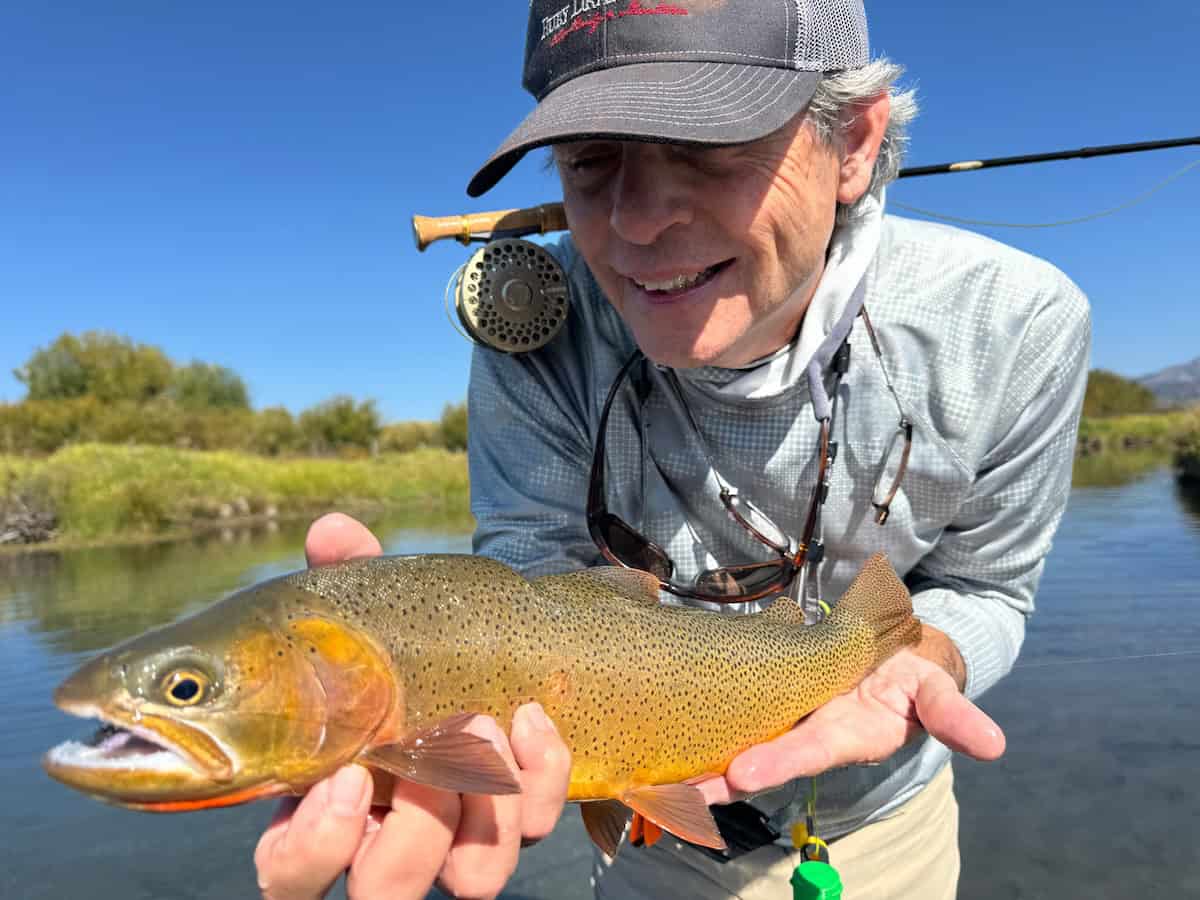
Hobby: Fly-fishing — 19 years
How did you get into this hobby?
Unexpectedly. I had never even held a flyrod, and then in 2007 I was asked to join the Board of Orvis (clearly not because of my flyfishing expertise) and for my Board orientation/indoctrination/immersion they put me right into a cold trout stream in cold Vermont weather with rapidly moving water. You had no choice but to learn… and to learn quick!
What’s the funniest, strangest, or most memorable thing that’s happened while pursuing your hobby?
That you can catch a 100+lb tarpon with a flyrod that weighs about 4 ounces.
What’s something about your hobby that outsiders usually don’t know or understand?
It is highly intellectual. I only fish with dry flys, meaning the fly is on the surface or barely below the surface of the water and you have to get the fish to come to it or chase it by making it look and act like a certain type of mayfly, salmon fly, ant, grasshopper, beetle, or caddis and present the fly to the fish so that it looks natural by the speed it’s moving, how it sits on the water, and how it moves with the current. I also prefer to sight fish, meaning I have targeted one fish in the water that I can see and will stay focused on catching that particular fish. And most important, it is always catch and release—I always release it back to its habitat.
Has your hobby taught you anything that carries over into your work or life at Goizueta?
Patience, persistence, and the willingness to be a lifelong learner.
If you could convince a colleague to try your hobby, what would you tell them to get them hooked?
Go to the Orvis website and sign up for Orvis 101 at the Buckead store. It’s free. They will teach you how to cast and walk you through all the gear and how it all works together.
Maria Bacigalupi-Hill: Marketing Manager
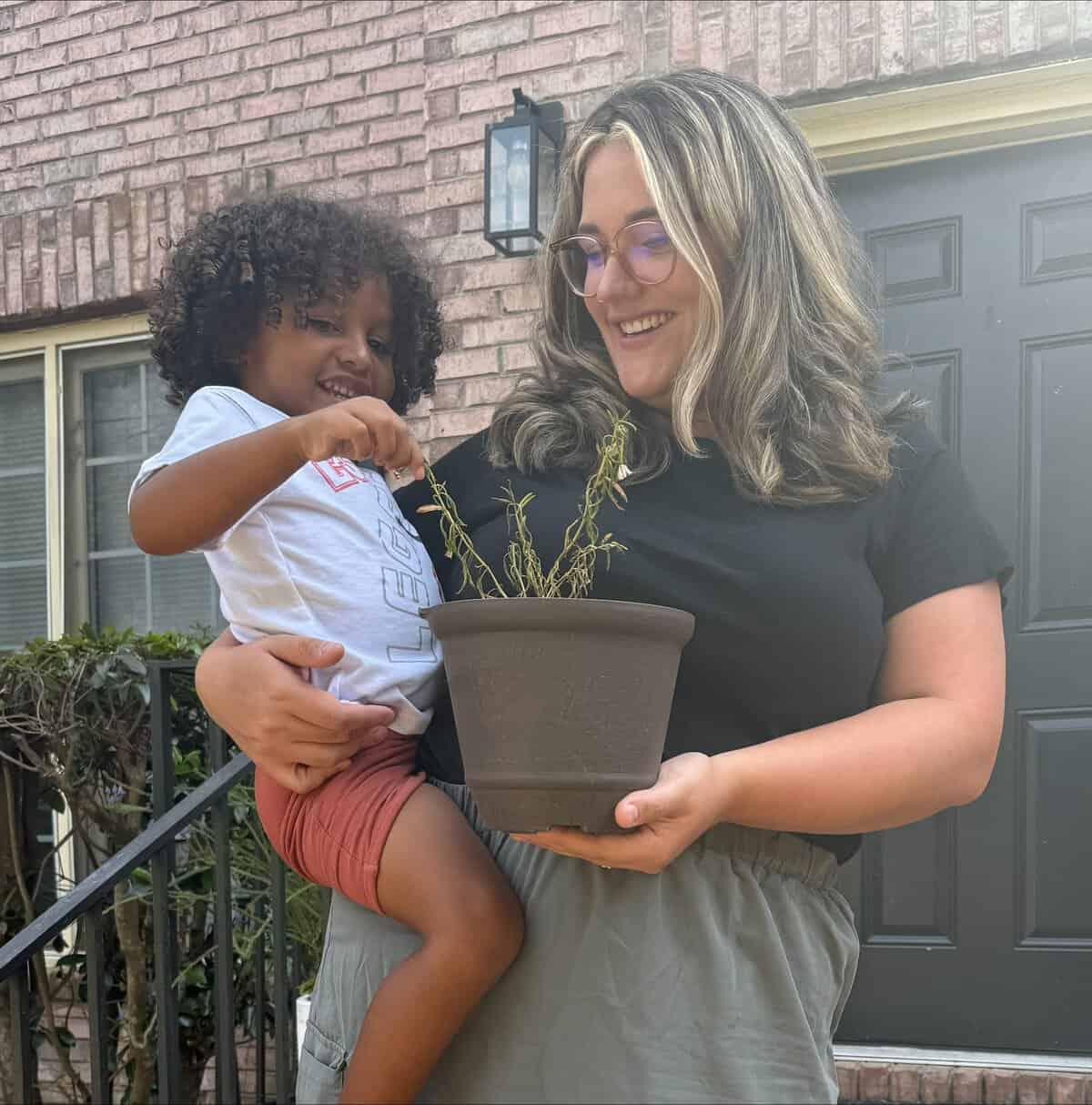
Hobby: Gardening/trying to keep plants alive
How did you get into this hobby?
I have always admired those with a green thumb and aspire to be like them. Apparently, admiration alone does not transfer the skill set, but I remain optimistic.
What would your Goizueta colleagues be most surprised to learn about this side of you?
I give it my best despite having a newborn and a busy little 3-year-old boy. Between keeping two tiny humans alive and attempting to keep plants alive, I like to think I am operating a very ambitious life-support program.
What’s the funniest, strangest, or most memorable thing that’s happened while pursuing your hobby?
Probably the moment I realized I had spent several weeks lovingly watering a plant that was already beyond saving. There is a fine line between dedication and denial, and apparently, I garden right on it.
How deep down the rabbit hole have you gone?
I wouldn’t say I’ve gone down the rabbit hole, but I have accumulated enough plants and gardening supplies to give the impression that I know what I’m doing. I have pots, soil, fertilizer, watering cans, and several plants with very optimistic futures. The expertise, however, is still pending.
What’s something about your hobby that outsiders usually don’t know or understand?
Plants are surprisingly dramatic. Some need more water, some need less water, some need indirect sunlight, and some apparently need a personal therapist to discuss why they’re unhappy. I have learned that “easy to care for” is apparently a very subjective term.
Has your hobby taught you anything that carries over into your work or life at Goizueta?
Absolutely: patience, persistence, and the importance of adapting when things don’t go according to plan. Also, sometimes you can give something your absolute best effort, follow all the instructions, and it still doesn’t work out. In those moments, you regroup, learn from it, and try again… but with a new plant.
What’s your proudest hobby-related accomplishment?
Successfully keeping a plant alive long enough that I stopped wondering whether I should start planning its funeral. Every thriving leaf feels like a personal victory, and I am choosing not to compare my success rate to anyone else’s.
If you could convince a colleague to try your hobby, what would you tell them?
I would tell them gardening is incredibly rewarding, especially if you go into it with realistic expectations and a willingness to learn from your mistakes. Start with one plant, do some research, and don’t let my experience discourage you. Someone should probably prove that this can be done successfully.
Any other fun facts, stories, or photos we should know about?
My gardening journey is best described as a combination of optimism, trial and error, and occasional emergency plant interventions. But despite my questionable track record, I genuinely enjoy it, and I remain convinced that one day I will earn that elusive green thumb. Until then, I will continue buying plants with confidence and hoping for the best.
Kirsten Travers-UyHam: Adjunct Professor in the Practice of Finance
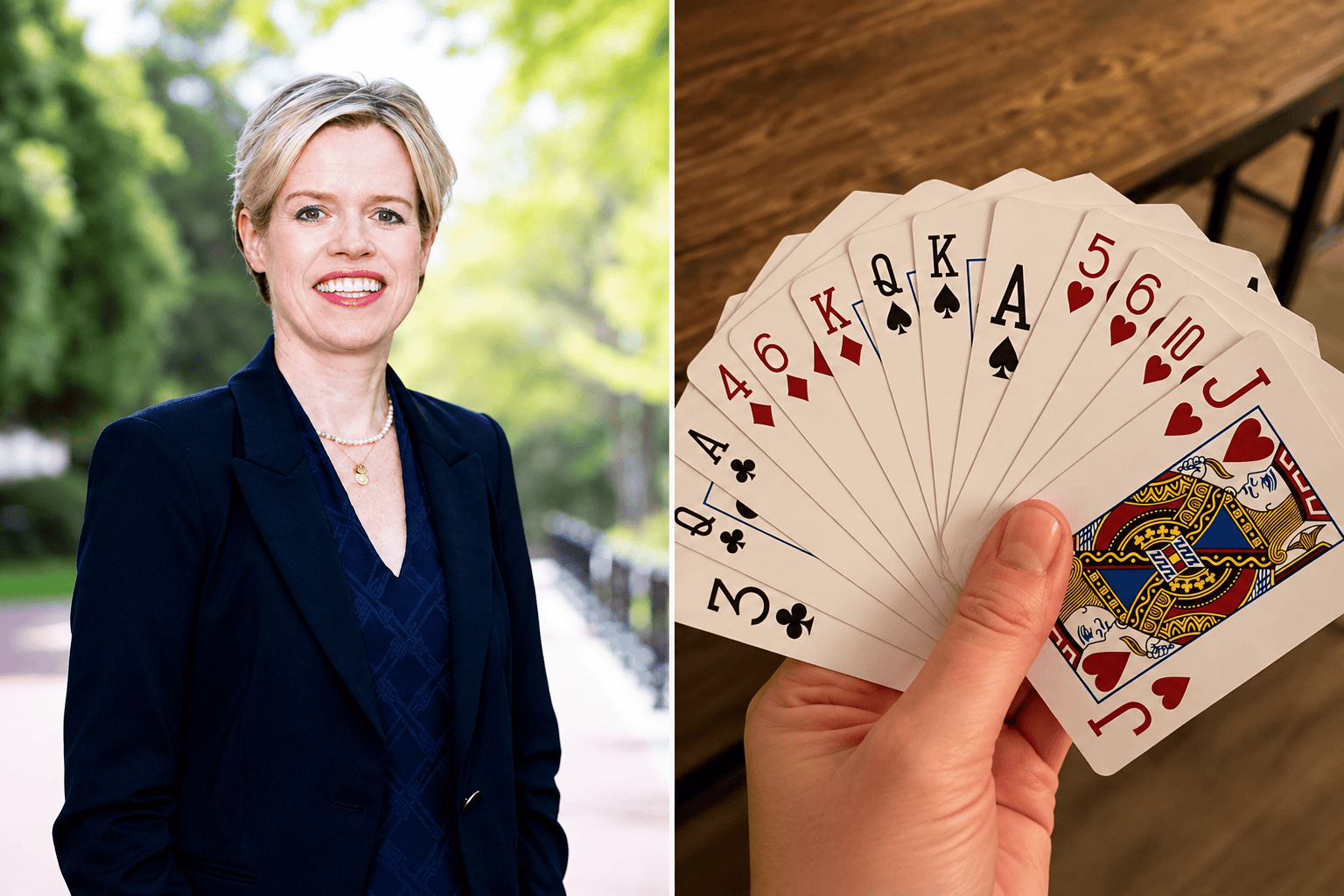
How did you get into this hobby?
I love puzzles and card games—any kind or style. I grew up on English and French newspapers and newsagents, which are full of paper puzzles from Europe and Japan!
What’s something about your hobby that outsiders usually don’t know or understand?
You can learn so much about another culture and the way they think based on their media and puzzles. The puzzles could even be in a language I don’t know, but it doesn’t matter if you know the puzzle rules. Japan has some incredible graphical puzzles that show their attention to detail and aesthetic beauty.
My favourite games are bridge (a British card game) and cryptic crossword puzzles. In a world of screens and AI, I love the fact that to win, you have to not only know the rules of the game, but also be able to strategise based on your opponent’s moves. Plus, it’s exciting to win!
Ryan Hamilton: Associate Professor of Marketing
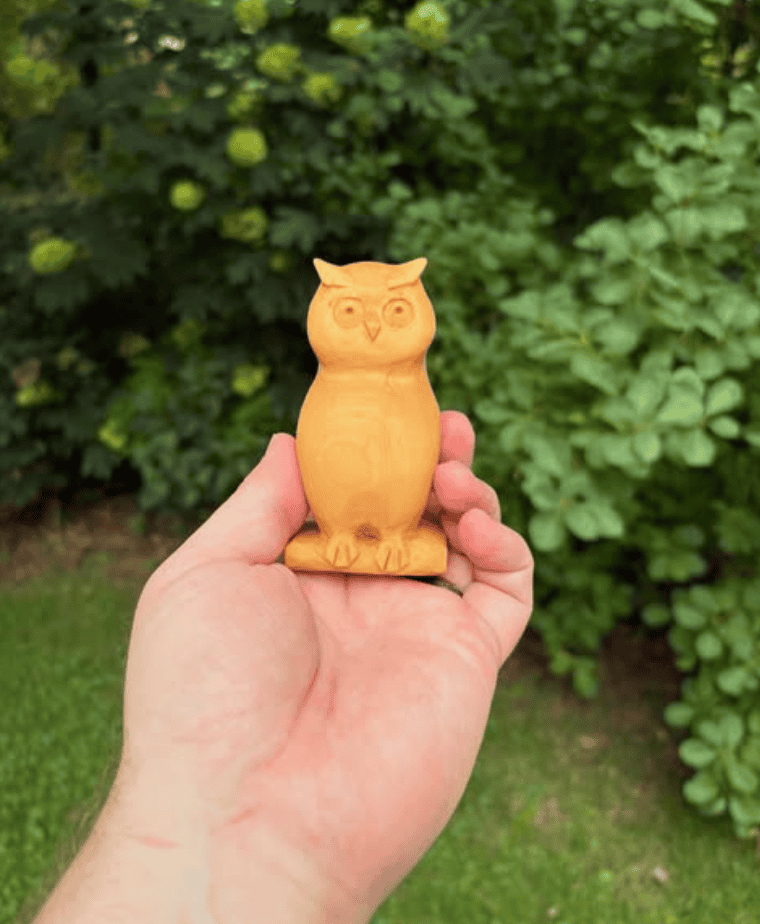
Hobby: Woodworking
How did you get into this hobby?
I bought a single saw to do some minor project around the house. From there it just snowballed.
How deep down the rabbit hole have you gone?
At this point I’ve invested a lot in tools and lumber. But it is sill probably cheaper than therapy? So I think of it as financially responsible in the long run.
Has your hobby taught you anything that carries over?
I think my hobby balances me. I spend my time writing, teaching, and doing research. In my spare time I like that I get to create something physical, using my hands. I like that I get to do both.
If you could convince a colleague to try your hobby, what would you tell them to get them hooked?
I would never try to recruit someone into woodworking. But everyone should try to find something they enjoy as much as I enjoy my hobby. It brings me a lot of joy.
Jessica Baker: Chief of Staff
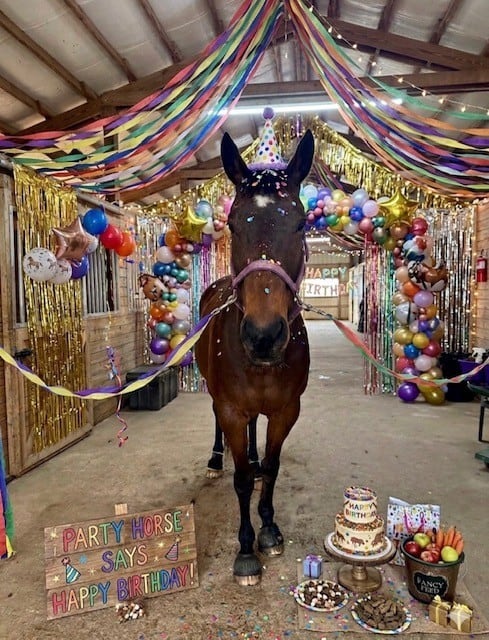
Hobby: Hunter/Jumper Riding (Hunters). I’ve been doing it for several years; I’ve owned my current horse (Party) for five years.
How did you get into this hobby?
My mom introduced me to the horse world. She rode and owned horses when she was younger, and after becoming an empty nester, she decided to get back into riding and competing in the hunter ring. I started spending more time at the barn with her and quickly fell in love with horses. What began as supporting my mom’s renewed passion became my own, and eventually I bought my own horse. I’ve now had my horse for five years, and horses have become a big part of my life.
How deep down the rabbit hole have you gone?
I would say I go down the rabbit hole every single day. One of the things I love most about horses is that there is always more to learn. My horse teaches me something new nearly every day, whether it’s about riding, training, behavior, or care. I’m constantly researching new training techniques, equipment, and equine health innovations. In fact, just this week I purchased red light therapy wraps for all four of my horse’s hooves. Horse people are always looking for ways to help their horses feel and perform their best, and I’m no exception.
Beyond riding and horse care, I’ve also become interested in equine photography and creative editing. I love using AI tools to transform photos of my horse into artistic images and unique portraits. It’s a fun way to combine technology with a hobby that is otherwise very traditional and hands-on.
Has your hobby taught you anything that carries over into your work or life at Goizueta?
Working with horses has taught me patience, consistency, and adaptability. Horses are incredibly intuitive and respond best to trust, clear communication, and calm leadership. Those lessons translate directly to my work, where building relationships, staying steady under pressure, and being willing to adjust my approach are all important parts of success. Horses have also taught me humility because no matter how much experience you gain, there is always more to learn.
What would your Goizueta colleagues be most surprised to learn about this side of you?
People are often surprised by how much effort goes into caring for and riding a horse. Riding is only one piece of it. Horse ownership involves learning about nutrition, veterinary care, training, conditioning, equipment, and behavior. It’s a sport, a partnership, and a lifelong learning experience all rolled into one. They may also be surprised to learn that I enjoy creating AI-enhanced images of my horse, blending my love of technology with my passion for horses.
If you could convince a colleague to try your hobby, what would you tell them to get them hooked?
I’d tell them there’s nothing quite like the partnership you build with a horse. They’re powerful, intelligent animals that demand your full attention, which makes time at the barn a great mental reset from everyday demands. Plus, spending time outdoors with horses is good for the soul.
Hancheng Cao: Assistant Professor of Information Systems & Operations Management
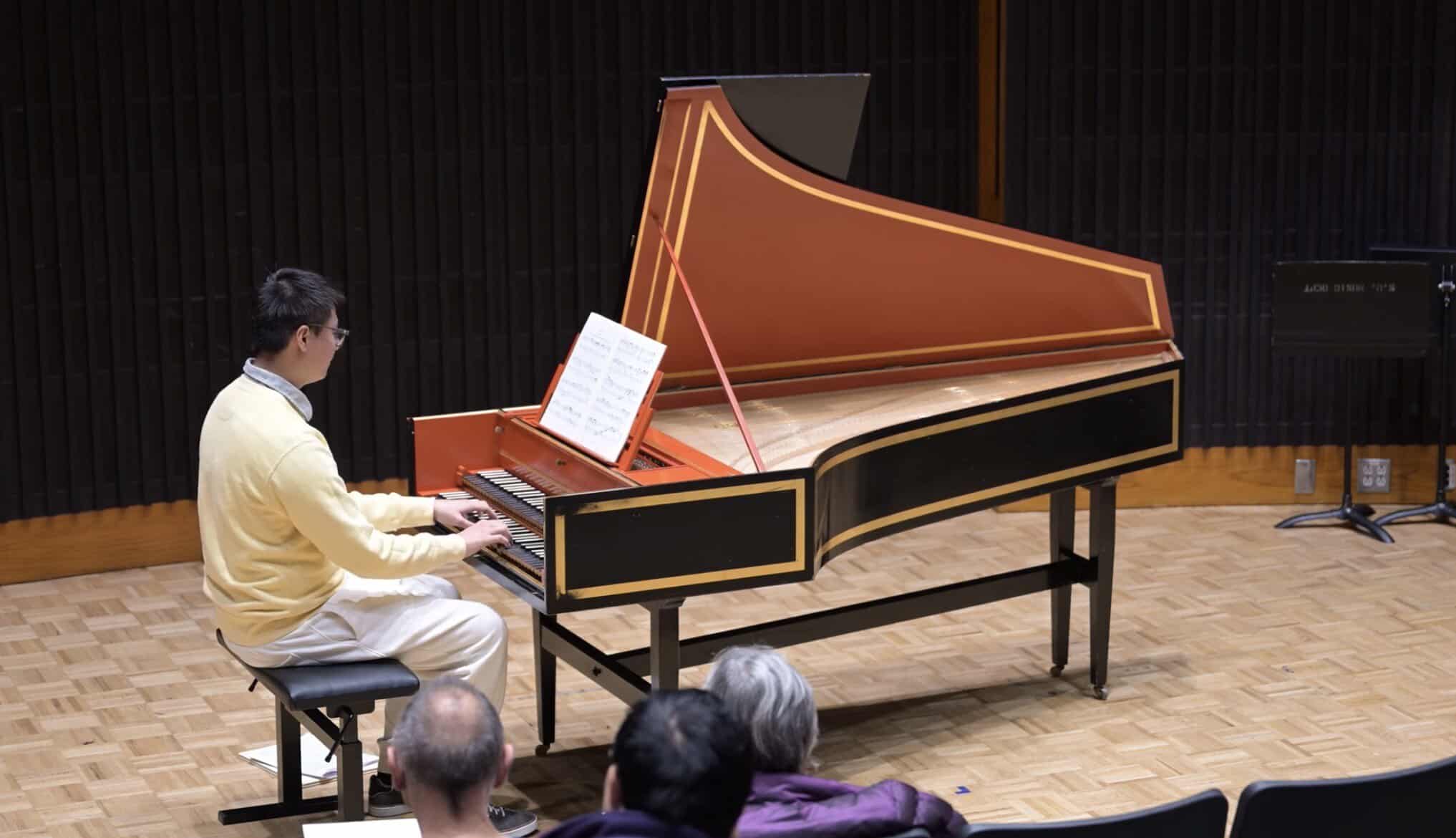
Hobby/passion: Classical piano and harpsichord. I’ve played classical piano since childhood and took up the harpsichord during COVID.
How did you get into this hobby?
I grew up playing classical piano and later became fascinated by Baroque music, especially Bach, Handel, and Rameau, which led me to the harpsichord. I haven’t had a chance to play harpsichord yet since moving to Atlanta, but I just got a grand piano at home and am very happy to be playing regularly again!
What’s something about your hobby that outsiders usually don’t know or understand?
The harpsichord is essentially a keyboard instrument that plucks strings—almost like playing a guitar through a keyboard. It was one of the main keyboard instruments in Europe before the piano became dominant. Unlike the modern piano, though, harpsichords were never standardized into one dominant design: French, Flemish, Italian, and German instruments can look and sound quite different, and some have two keyboards. That variety is part of what makes the instrument so fascinating.
What’s your proudest hobby-related accomplishment?
While I was a PhD student at Stanford, I received a Stanford Department of Music award for harpsichord.
Christina Wan, Ph.D.: Director of Student Affairs, Master of Science in Business Analytics
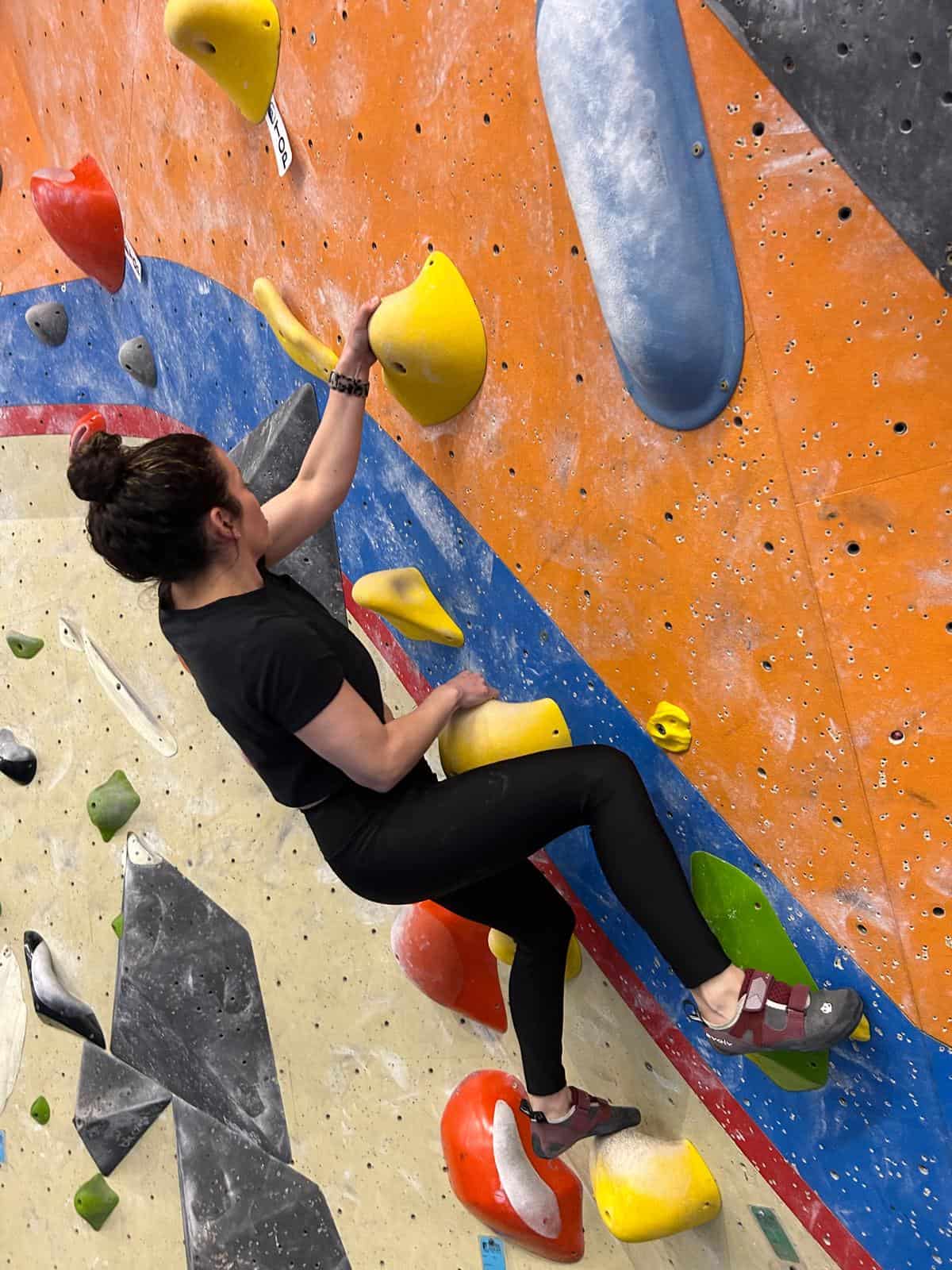
Hobby: Bouldering! (climbing indoors). I’ve been doing it off and on for a few years— it’s a great escape, uses my brain, and is a serious workout!
Has your hobby taught you anything that carries over into your work or life at Goizueta?
Climbing has taught me a ton that carries over into work! Our values in MSBA are Curiosity, Grit and Humility—and that is absolutely the same on the climbing wall. I am humbled every time I climb! It is hard! But I’ve got to be curious, not give in to fear, and have grit to keep coming back and trying again. Sometimes I succeed and get to the top of the wall, and most days I don’t. But you just keep trying! Bouldering involves climbing without ropes on short walls—and it is a very technical, strength-based and fun hobby. And requires immense concentration to think through your next moves, and how to get to the top of the wall and “send” the problem.
Any other fun facts, stories, or photos we absolutely need to know about?
I’ve climbed with many Goizueta students over the years. It is such a great joy to share my hobby with students (now alums, many of them) and some of them continue to climb after they graduate and/or climbed before they got to Emory. When we go climbing together, we get a workout, build community, and have tons of fun.
Looking for more inspiration to rethink the role work plays in a well-balanced life? See what Marina Cooley and Goizueta MBA students learned in Denmark, where approaches to work, well-being, and productivity offer a different perspective on finding balance.