
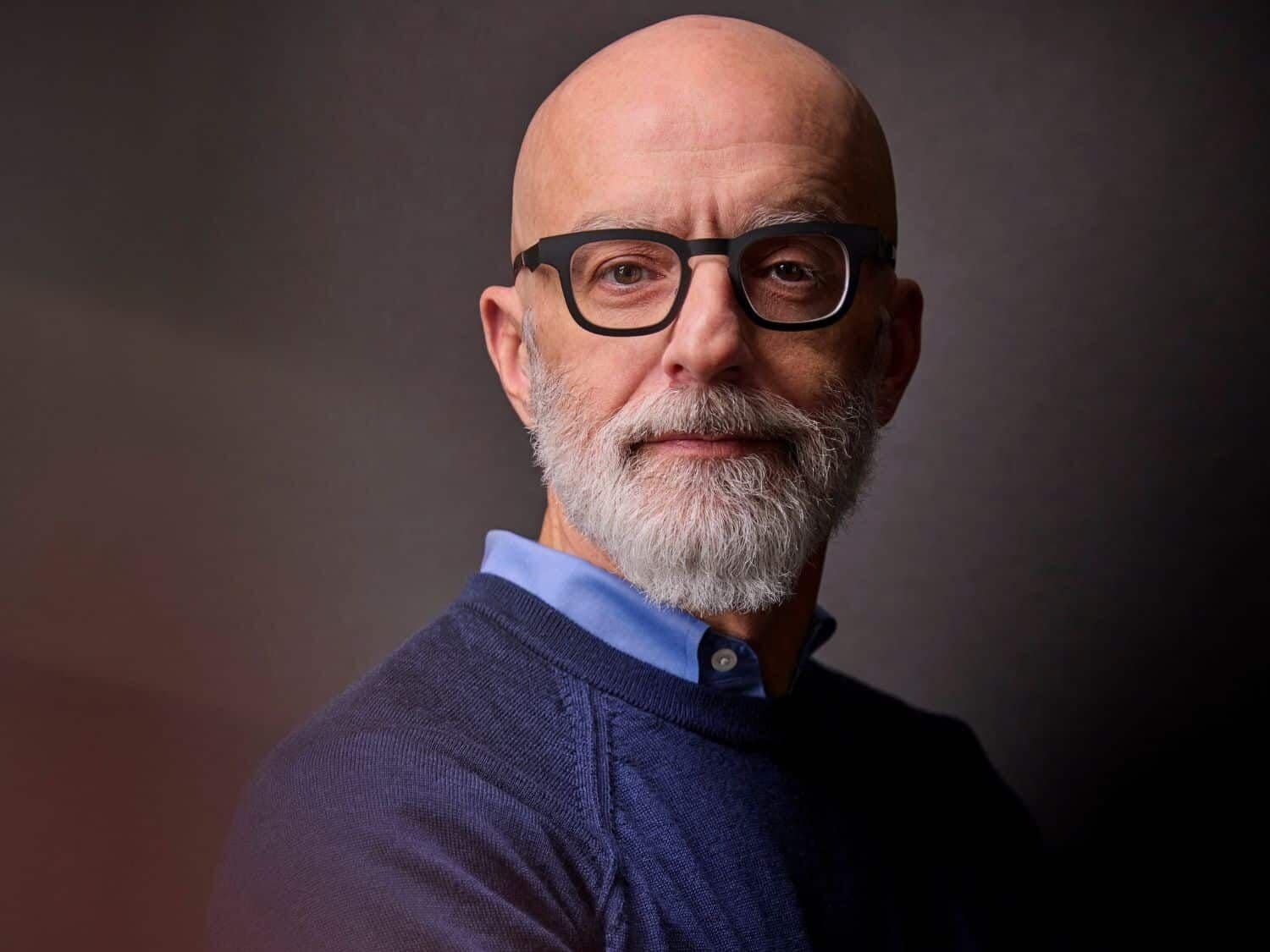
In 2012, Sean Mayberry 97MBA and his wife used their personal funds to launch a nonprofit called StrongMinds. The goal was to bring group talk therapy to Africa to treat depression—especially among women. Women represent the majority of those affected by depression globally—and are often the backbone of families across Africa. By focusing on the pillar of a family—and of the community—StrongMinds can have a greater impact and reach.
Since 2014, the nonprofit has treated 1.6 million people and reached another 1 million through education. This year, StrongMinds celebrated its 13th birthday.
“The biggest reward was when we hit the one million mark,” recalls Mayberry about the nonprofit’s milestone of treating one million people. “It’s not about bragging. It’s about the model working. If we can do one million, clearly we can do a lot more. We can just keep dialing it up.”
Back to the Beginning
Before they had treated one million people for depression, Mayberry’s wife forwarded him a New York Times article that he’d missed. The article highlighted research by Columbia University faculty showing that group talk therapy could effectively treat depression.
Mayberry had been searching for something—an idea that would bring him back to Africa. During his time with the U.S. Foreign Service, Mayberry served as an officer in Kenya. He eventually left the Foreign Service for a role in the tech industry before pivoting back to international work as CEO of an organization based in Africa. In the early 00s, there was a lot of work being done in Africa regarding safe drinking water, HIV/AIDs, and malaria.
But Mayberry was looking for something different. Having spent a significant amount of time in Africa, Mayberry saw the lack of access to care for mental health disorders, including depression.
“If a mother is depressed, the family struggles. If a mom is not depressed, the family can thrive,” says Mayberry.
By focusing on women, the organization can also put its funds to the best use by treating more people—a greater return on investment. While their primary focus is women, the nonprofit also treats men, adolescents, the incarcerated, and refugees.
“Our mission is to improve the mental health of all people in Africa,” explains Mayberry.
Finding Financial Support
About two years into StrongMinds, Mayberry and his wife were seriously considering giving up. The funds just weren’t coming in. People couldn’t grasp the importance of the nonprofit’s work or understand why they didn’t just continue the existing efforts in Africa.
Mayberry decided to take one last trip to see how things were going on the ground. During his return trip home—on what he remembers as a particularly low point—he opened his laptop at the gate and found a $50,000 grant to StrongMinds in his inbox.
That donation was the turning point. It was just enough money to allow the organization to continue. Within a year, they’d raised hundreds of thousands of dollars more. Mayberry references a quote by boxer Mike Tyson: “We all have a plan until we’re punched in the mouth… or at least are smart enough to bob and duck and miss the punch.”
Those early years for StrongMinds highlights the biggest challenge facing nonprofits: They’re running two businesses simultaneously. One side of the team needs to do the work of the mission, and the other needs to raise the funds to support that mission.
In late 2025, StrongMinds became the recipient of a $5 million grant from The Action for Women’s Health Initiative, which is funded by Pivotal Ventures, an organization created by Melinda Gates. Mayberry put his nonprofit on Gates’ radar a few years into StrongMinds’ inception. This grant has no time restrictions or rules about usage, which Mayberry jokes is the best kind of financial support.
“The grant allows us to do what we’re doing, which is continue to scale depression treatment for women in Africa.”
Mayberry says the grant from Melinda Gates’ organization also serves as high-level validation of StrongMinds’ impact and investment potential—more specifically, “that mental health in Africa matters.” They’re hopeful that other donors will follow Gates’ lead.
Start-Up Mentality
A tool that has helped Mayberry throughout his nonprofit experience has been maintaining a start-up mentality, even though he doesn’t consider himself a traditional entrepreneur.
“One of the strengths of StrongMinds is that we’ve never fallen in love with our model or service. We’re happy to throw it out and start something new, which has allowed us to be nimble and flexible,” says Mayberry.
When StrongMinds began, their group talk therapy was 16 weeks and cost $400. Today, it’s six weeks and costs just $15 per person. The goal is continuous process improvement to reach as many people as possible. The team is currently conducting research on the possibility of shortening the sessions to one day.
“It’s really pushing the envelope,” says Mayberry. “But the funding environment has gotten a lot more difficult, so we really need a radical improvement.”
Mayberry credits the nonprofit’s continual, incremental improvements as its biggest and most rewarding success. As they refine their process, they reach more people and have the opportunity to expand to more countries—maybe even more continents. The nonprofit began in Uganda and has since expanded to Zambia, Kenya, Malawi, and Tanzania.
In addition to the group talk therapy sessions, StrongMinds is also does work in mental health advocacy. In Uganda, the nonprofit has helped to create a policy that requires public schools to prioritize students’ mental health.
Mayberry credits his time at Goizueta, that career-changing MBA experience, for teaching him those entrepreneurial skills. He recalls the lessons he learned and the value gained from being in a classroom with people from varied backgrounds—the opportunity to learn from someone else’s lessons and mistakes, whether they’re immediately applicable or something to be picked up in the future.
“While I have a diverse background, it all comes together, and it wasn’t a plan,” says Mayberry.
Leading into the Future
The past few years have been a whirlwind for StrongMinds. In 2024, Mayberry was recognized by TIME Magazine in their top 100 most influential people in health, an honor that Mayberry credits to the entire nonprofit. The recognition honored the hard work of the whole team and validated their mission.
“It was my name, but it’s always about the team. It’s always about the organization,” Mayberry says. “It was super gratifying for us as a team because it’s that recognition of mental health in Africa.”
The publicity was also an opportunity to reflect. When Mayberry began StrongMinds, it was just him, toiling away in the family’s attic. Now, he leads a team of 300 people, most of whom live in Africa. As a leader, he aims to instill a sense of purpose in his staff, regardless of the role they play. Mayberry references the classic analogy of different people laying bricks, one describing the work as “building a wall” and the other “building a cathedral.”. He hopes that although it may seem like someone is building the wall, they’re really helping to build that grand cathedral.
“We all want to be part of something bigger,” says Mayberry. “Goizueta and Emory create these world-class graduates who go out and change the world…StrongMinds is ending depression in Africa, and we’re going to leverage that to end it across the planet.”
From the classroom to communities around the world, Goizueta graduates are putting business to work for good. Explore the Full-Time MBA program and how it prepares leaders to drive impact beyond the bottom line.