

With over 4000 radiologists interpreting more than 55 million images per year, Radiology Partners is one of the leading radiology practices in the country. Physician-led and physician-owned, Radiology Partners’ leaders tend to be more adept at reading MRI results than setting a strategic vision or fine-tuning company culture. In an effort to beef up its leaders’ business skills, the company turned to Emory Executive Education.
“Rather than a cookie‑cutter curriculum, Emory Executive Education invested the time to understand the realities of our physician‑led practice and partnered with us to tailor content, cadence, and delivery to our business,” says Jâlie Cohen, chief human resources officer of Radiology Partners. “The program not only met but exceeded our expectations, grounded in our strategy, adaptable to local constraints, and immediately actionable.”
In line with Goizueta’s emphasis on applied learning and strategic partnership, Emory Executive Education works to empower business leaders to solve complex challenges. By collaborating directly with organizations to design customized learning initiatives, Emory Executive Education addresses each firm’s unique goals and challenges.
We’re about helping companies solve business problems through developing the knowledge, skills, and capability of their people.
Nicola Barrett, Chief Corporate Learning Officer, Emory Executive Education
“Leading, managing and growing a business through times of massive change, disruption and uncertainty is not for the faint-hearted,” says Nicola Barrett, chief corporate learning officer of Emory Executive Education. “If you’ve never been exposed to frameworks of leadership, change, decision-making or strategy—as is the case for many doctors—it is highly likely you are not going to realize the full potential of your organization.”
The Process: Collaboration and Creation
Emory Executive Education’s collaboration process begins with a values alignment assessment while gaining clarity about a company’s goals within their organizational context, explains Pam Tipton, senior director of Emory Executive Education.
That assessment is followed by an in-depth needs analysis—a set of conversations with company leaders, a member of the Emory Executive Education team, and a Goizueta faculty member. Together with Goizueta faculty, the team designs a dynamic learning approach for the client based on the outcome of the needs analysis.
We’ve got a brilliant cadre of faculty that can have five or six different lenses through which they facilitate a conversation with executives depending on what they’re trying to do.
Pam Tipton, Senior Director, Emory Executive Education
Tipton adds that executives who have an MBA or who have participated previously in a management development program may be unaware of newer, more effective approaches developed through faculty research. “Our faculty members are customizing their intellectual property to your organizational needs and goals, your culture, your language, and using examples from your industry.”
Learning initiatives are tailored to fit the company’s specific needs and desired outcomes. Is the company growing? If so, how? Is it entering new markets? Is it in a mature market and planning to grow through M&A? Is it looking to leverage AI? “Those are all different strategic conversations,” adds Tracey Trombino, senior director of business development for Emory Executive Education.
Radiology Partners
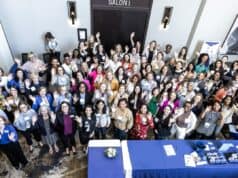
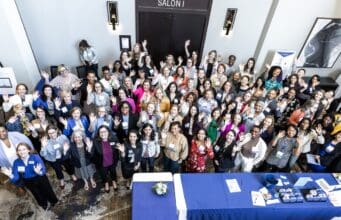
Curriculums can be as simple as repeatable two-to-three-day exercises or programs that take the better part of a year to complete. Programs can be in person, virtually, or via a hybrid format. After gaining deep insight from Radiology Partner leaders ranging from local practice radiologists, regional leaders, and executive leadership, the Emory Executive Education team designed a four-module program to be executed over eight to 10 months. “The Radiology Partners program is a deep investment by the national practice and a deep investment for us into their culture and business,” says Tipton.
Rather than a cookie‑cutter curriculum, Emory Executive Education invested the time to understand the realities of our physician‑led practice and partnered with us to tailor content, cadence, and delivery to our business.
Jâlie Cohen, Chief Human Resources Officer, Radiology Partners
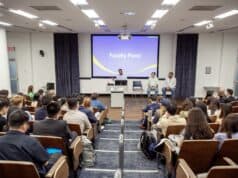
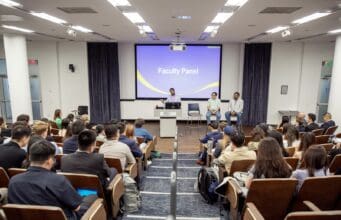
Radiology Partners’ curriculum includes both in person modules and virtual “intersessions” led by Goizueta faculty, as well as a team project designed around a strategically important challenge by practice leadership.
“The Emory team’s approach to program design and execution has been outstanding,” says Cohen. “Equally important, their service mindset showed up throughout delivery: responsive, collaborative, and willing to pivot in real time as needs evolved without sacrificing quality or outcomes. This level of customization and agility is rare, and it is precisely why we are doubling down on our partnership with Emory.”
Legacy Partners: UPS and Genuine Auto Parts
While Radiology Partners is a more recent collaborator with Emory Executive Education, several companies have been working with Goizueta’s Executive Education team for well over a decade, including Fortune 50 logistics company, United Parcel Service (UPS), and Genuine Parts Company, a global service provider of automotive and industrial replacement parts and solutions.
Since 2010, Emory Executive Education has worked with UPS to strengthen the global general management acumen of its mid-level executives and collaborated with the company post-COVID to help its top 400+ leaders “become more digitally fluent,” explains Tipton.
“As part of our digital journey, we were exposed to application and the thought leadership behind digital transformation,” explains Matt Guffey, executive vice president, chief commercial officer, and chief strategy officer at UPS. “When we brought together the thought leadership of Emory faculty and the experience of UPS leaders, who contextualized it for our team, it brought the two things together to push our people to think differently, compete at the edge, while not losing the important parts of our culture.”
We built the curriculum collectively, together. Our strategic partnership with Emory was critically important.
Matt Guffey, Executive Vice President, UPS
Tipton credits the fact that UPS “invested a lot of time helping equip our faculty with examples and case studies of what they were already doing,” with the program’s success. “It was really about how a digital mindset can enhance your business, how it can enhance your customer interactions and give you insight into your customers in new and different ways,” Tipton adds.
Emory Executive Education has worked with the Genuine Parts Company (GPC) since 2007 on its executive development program. “It involves all the components of leading self, leading others, leading the business,” explains Jennifer Eames, director of Emory Executive Education. Genuine Parts Company executives who go through the program learn more about how their roles fit into the company’s financial picture, “regardless of the business unit they’re in,” adds Eames.
“Instructors speak from 12 to 15 years of experience working with Genuine Parts Company and talk about the company as if they’ve been an employee,” says Corey Rewis, vice president of global talent at Genuine Parts Company.
A Long-Term Paper Project: Sylvamo
Sylvamo, the Memphis-based paper company with roughly 6,500 employees across the U.S., Europe, and Latin American, approached the Emory Executive Education team with a decision-making framework the company wanted to build into a “completely functional roadmap to help their financial department make better decisions,” explains Eames.
Early in the process, it was decided the roadmap would be expanded to the entire enterprise, Eames says. That meant expanding the planning team to include representatives from across the company. It’s been a multi-year project. “We’ve also had discussions with Sylvamo about how to utilize AI as a conduit for the framework,” adds Eames, “to help it come alive and be incorporated into the flow of work.”
The Power of Faculty Expertise
The Executive Education Team works with faculty who are not only experts in their field, but those gifted at facilitating classroom dialogue and interaction. “We hear consistently from most of our clients that they don’t want their people sitting in a room being lectured to,” notes Eames. “They want engagement, they want activities, they want the application of concepts.”
Goizueta faculty modify their teaching approaches, create safe spaces and pivot “to address any emerging themes to serve the outcome of relevant, applicable learning,” adds Barrett.
This is what an Emory Executive Education “classroom” environment is all about—our faculty focus on the challenges participants are facing and what they need to learn to be successful now and in the future.
Nicola Barrett, Emory Executive Education
Faculty who are good at facilitating interaction take advantage of all the brain power in the room. “So much knowledge shows up in the heads of the leaders and professionals that come into the classroom,” notes Tipton. “They learn so much from each other and that’s super important because they bring that intimate organizational context.”
Measuring Outcomes
According to Barrett, ROI and outcomes are critically important, although measuring the adoption of new behaviors and mindsets is more difficult than testing for new skills. “Our approach is to ‘start with the end in mind,’ which is why we invest so much upfront getting to know the organization, the learners, and their environment,” says Barrett.
That’s when the conversation happens about what to measure, how to measure, how we will know that the development is having a positive impact for the individual and the organization.
Nicola Barrett, Emory Executive Education
The team uses several different approaches, including before and after surveys, daily reflections, manager feedback, and work focused projects. “We know from Emory faculty research that adults learn from reflecting on the experiences they have—the experience by itself is not enough—so we try to incorporate time in program schedules for reflection, individual and group.”
Several weeks after the completion of a program, the Emory Executive Education team often conducts a follow up “reflection round table” with program participants and client sponsors. “It’s an opportunity for those who made the investment in the program to actually hear that things from the program are actually being applied,” says Tipton. “And for those who participated in the program it serves as a reminder and accountability tool to apply what you learned in your day-to-day work.”
Learn how Emory Executive Education partners with organizations to design customized learning experiences that address real business challenges. Explore Emory Executive Education.