

By Emory Executive Education
The desire—and critical need—to learn new things as career paths evolve is what drives dozens of healthcare leaders to enroll in professional development programs at Emory University. The future-focused Business of Healthcare courses, certifications and customized programs are offered by Emory Executive Education, and have been designed by renowned thought leaders from Emory Goizueta Business School, Emory School of Medicine, and Emory Healthcare.
A report from the U.S. Bureau of Labor Statistics predicted that leadership positions for all medical and health services managers will grow by nearly 25 percent through 2034, a rate that is outpacing the average for most other occupations. The reasons are many, including the evolution from fee-based to value-based medical care, managing the explosion in artificial intelligence applications for healthcare, and an aging population that places more emphasis on health and wellness.
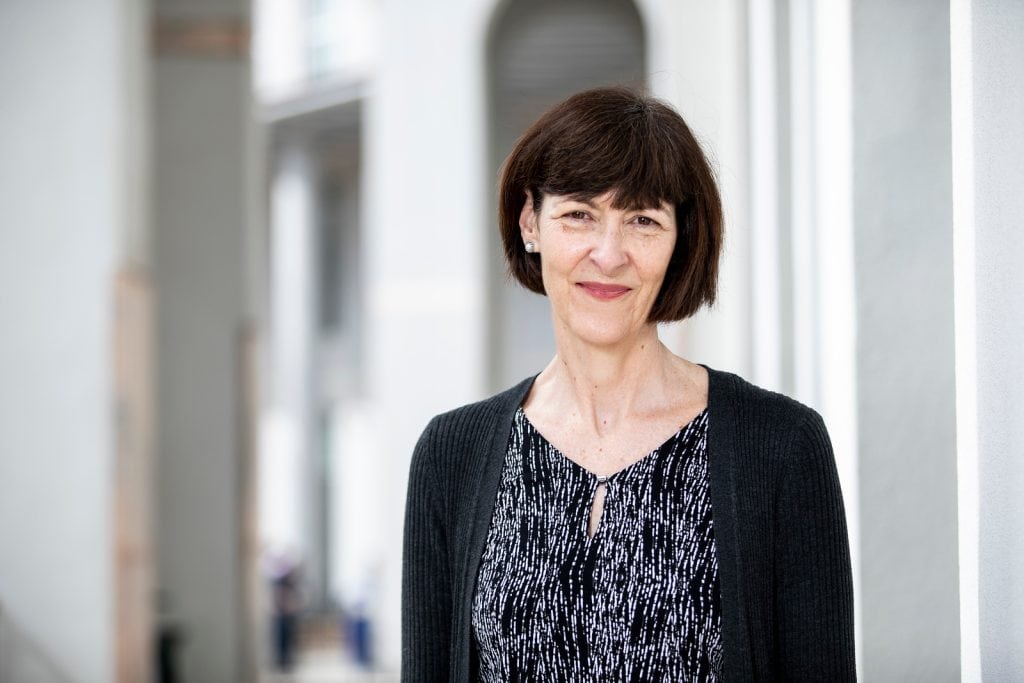
According to Nicola Barrett, the chief corporate learning officer at Emory Executive Education, who was instrumental in developing the popular Chief Medical Officer (CMO) program in 2022, the program provides practical, research- and experience-based insights that healthcare executives can immediately action.
“For many healthcare leaders, the program offers new information for them. Many have never had training or professional development around leadership or business acumen,” she observed. “There is a real thirst for this type of information sharing.”
Michael Sacks, a professor in the practice of organization and management at Goizueta Business School who also serves as faculty director of the Chief Medical Officer program, has seen that desire for business learning firsthand.
“When I started teaching healthcare leaders, I asked them questions: How many classes did you have in medical school about leadership? Or about business? Or managing a budget? And the answer was always ‘zero.’”
“We’re filling a huge unmet need,” he adds.
That demand has prompted Emory University and other higher learning institutions to add curricula and programming that address the need for advanced, healthcare-specific education that emphasizes business, financial, technological, and leadership training.
Indeed, many participants in Emory’s programs say its primary appeal was that it blends the university’s highly renowned, world-class business expertise via Goizueta Business School with the unparalleled industry leadership from the Woodruff Health Sciences, including Emory Healthcare through its legacy of pioneering clinical care, cutting-edge medical education, and groundbreaking research.
For most physicians, healthcare is a calling. But it’s a big business, too—and one that many medical practitioners positioned to lead hospitals and other medical facilities feel they are ill-prepared to undertake.
That’s what drew R. Amadeus Mason MD to be in the inaugural class of the Chief Medical Officer program, in 2022. Mason, who is Chief Medical Officer for the Atlanta United FC soccer club, described the coursework and cohort networking as “game-changers” for his career.
“The program didn’t just teach me how to lead; it gave me the strategic tools to drive change and solve real-world challenges. It also revolutionized how I communicate, helping me connect with clarity, confidence, and intent. It’s a must for anyone stepping into leadership roles in healthcare.”
A year after, Jose Jiminez MD successfully completed Emory Executive Education’s Chief Medical Officer certificate program, he eagerly came back for the in-person forum that’s held annually for participants and alums of the program.
Capping the self-paced immersive learning journey is the Chief Medical Officer Forum hosted at Goizueta Business School on Emory University’s campus in Atlanta. Dr. Jiminez attended the 2024 forum, with others from his cohort—and returned as an alumnus in 2025.
“I really like when I go to the forum. The speakers always provide a different view of important healthcare issues or leadership fundamentals,” says Jiminez, who is senior vice president for medical affairs at MCS Puerto Rico.
He held up a handful of papers, plucked from the desk in his office in the company’s San Juan headquarters. “I refer to my notes from the forum, for my job, every day. I’m planning to go again next year.”
For Jiminez—an emergency room physician who has transitioned into management for a leading health insurance provider in his native Puerto Rico—the annual forum that focuses on healthcare innovation and strategic priorities is an opportunity to learn from guest speakers and panelists from some of the world’s leading institutions.
But for him, it has become a can’t-miss priority for another important reason: He values networking with the Emory University faculty members, thought leaders, and classmates from his cohort who helped steer him through the online core curriculum and electives.
“The greatest thing I took from the program is the amazing network of classmates I developed. We talk a few times a month, to exchange ideas or to see where we’re at or what we’re needing in our jobs. I wouldn’t have that without the Chief Medical Officer program.”
According to numerous participants, forming a bond with classmates and other peers from across the globe is an invaluable benefit from the Business of Healthcare programs offered by Emory Executive Education.
That’s because medical doctors are being thrust into CMO or similar managerial leadership roles at a rapid rate, often with little or no formal business, administrative, finance, or leadership training; relevant experience; or network of peers facing similar challenges.
Data confirms that the demand for healthcare business leaders is growing at a startling rate. Already a fast-emerging field, healthcare leadership positions began expanding exponentially during and after the COVID-19 pandemic, as health systems, corporations and other entities scrambled to adjust to a new paradigm for managing health and wellness in organizations across numerous industries.
Nicole Hitpas, who is chief marketing and communications officer for Goizueta Business School, believes the Emory Executive Education’s multi-modality offering makes it particularly useful for busy working professionals.
“They can take a course today, and then tomorrow implement what they have learned. And bring back any insights and questions they have to future sessions. That interactivity and networking among colleagues is a real benefit. And the annual CMO forum is a great platform for learning and sharing.”
Among the real-world challenges discussed during the 2025 forum was the heightened interest in technology-driven innovations in healthcare, and what healthcare leaders must do to leverage them for the good of their organizations, as well as the employees, patients, customers and/or community members they serve.
That’s exactly what one of the forum’s guest speakers—Monique Smith MD—is pursuing as founding executive director of health DesignED at Emory, where she works to channel the experiences of emergency medicine patients into reimagining how technology and new ways of providing care improve health and well-being.
During her remarks, Smith discussed how rethinking patient care—with the aid of technological innovations—requires an all-inclusive approach to answering numerous questions about how a major shift in the business model of care impacts all a system’s stakeholders.
“We’re in this new world of thinking about well-being and creating value differently, and the challenges that presents for our care delivery models.”
“We start with how the new model is certainly of high value to the patient, and improves the work (environment) of ER doctors. But does it for the reimbursement folks who (must) process claims in a certain way? Does it work for the long-term view of how the organization wants to grow?” says Smith, a Harvard educated emergency physician widely recognized as a leader in healthcare digital transformation.
She believes such all-encompassing approach is important for new healthcare leaders to adopt, as is—in her view—the imperative for physician leaders to learn how to speak the language of business.
“As much as we would all love for healthcare to be a little more altruistic, it’s still a business operation. Being very clear about how you are contributing to the business case is important. You can’t be left behind.”
Unsurprisingly, another widespread technological innovation was a front-and-center topic at the 2025 forum: the impact of artificial intelligence (AI) on patient care and the management of healthcare entities.
Alistair Erskine MD—formerly chief information and digital officer for Emory—noted in his remarks that AI is a critical component of Emory’s ongoing digital transformation, especially as it applies to supporting the institution’s strategic focus of improving lives and providing hope for patients, families and communities.
For instance, after patients are discharged, clinicians access a real-world evidence report which uses AI to analyze large data-assets of anonymized patient records, providing them with rapid answers to specific medical questions about their treatment plans.
“Emory providers can now surface practice-based evidence when evidence-based medicine does not exist,” noted Erskine. “(AI) helps the care team provide best-in-class support of patients.”
According to keynote speaker Ravi Thadani MD MPH, AI is becoming the fulcrum for what he called “the hospital of the future”—by streamlining accounts receivable, improving the accuracy of diagnoses via imaging, hastening the development of pharmaceuticals, preventing cyberattacks and hundreds of other breakthroughs.
But he emphasized that AI is not a panacea; it brings challenges, too, that healthcare leaders must address.
“There has been sort of a huge explosion in views (touting) artificial intelligence as being a savior for healthcare,” said Thadani, who as Emory University’s executive vice president for health affairs has greenlighted many AI-based updates throughout the system. “But when it is implemented, who takes accountability? Where’s the liability? Will it improve patient satisfaction?”
“As Chief Medical Officers, these are the questions we need to ask and answer.”
Thadani also opined that while AI is likely to alter, enhance or even replace certain physician or nursing duties, technology can never replace a patient’s need for human interaction.
“I think that AI is going to have a huge impact in non-surgical specialties in medicine,” he says. “But the clinical part of our work is not going to change. There are things that AI and a robot will just never do.”
Rodriguez Davalos MD, president of the Society of Pediatric Liver Transplantation, Canada—along with many other attendees of the 2025 forum—was enthralled by the presentation given by Kristen Cranmer. Formerly a nurse practitioner, Cranmer found a passion for leadership, ultimately rising to her current position with Children’s Healthcare of Atlanta as the director of hospital planning for the Arthur M Blank Hospital.

When the massive 19-story, 446-bed, 1.8 million-square-foot facility opened in 2024, it culminated nearly a decade of planning, construction and readiness that Cranmer couldn’t have imagined overseeing early in her nursing career.
“I’d never built a hospital before. Many of the people on my team had never built a hospital before,” noted Cranmer, who described the importance of renting a warehouse to build a 100,000-square-foot cardboard mockup of the hospital to test the efficacy of its layout and design before construction began.
More than 400 hospital staff members—nurses, physicians, IT experts and more—visited the mockup, and identified 320 different design opportunities that Cranmer believes saved about $30 million in construction design change fees.
But even more importantly, the mockup has helped optimize the patient and practitioner experience in the hospital.
“You might have the best idea ever, but if you don’t identify your stakeholders and integrate them into your project, you’re really not going to be successful.”
That insight from Cranmer was a key learning for Jiminez, even if he never oversees the planning of a huge hospital: “Some of us (in the program) are heads of departments, others are Chief Medical Officers or high-level directors. I like that the forums, and the coursework, are designed so that you can adapt these learnings to what you are doing in your job.”
Another popular speaker at the 2025 forum was Henry Ting MD, who knew what question was running through the minds of the physicians in his audience—so he addressed it before anyone asked it:
Why is a cardiologist (formerly) from Mayo Clinic working at Delta Air Lines, and what does he do there?
It’s a question the chief health and wellness officer—an airline industry first—for the nation’s largest airline gets a lot, and he had a ready answer during his address on day two of the 2025 CMO forum.
In particular, and in the wake of the global COVID-19 pandemic, numerous large-scale businesses, like Delta, have created corporate C-suite positions to address health, safety and well-being considerations for employees, vendors and customers that can have an enormous impact on company performance.
“Mine is a strategic role, thinking about health and wellness. How do we keep our employees and passengers healthy?” explains Ting, who previously oversaw quality of care, patient safety, patient experience and affordability as Mayo Clinic’s first enterprise chief value officer. “When I started, I was a clinician making an impact one patient at a time. Now, I can make a bigger impact keeping 100,000 Delta employees, their family members and millions of passengers healthy and well.”
During Ting’s riveting address, he described how he and his 70-person team take a holistic approach to caring for Delta stakeholders by researching and investing in physical, emotional, social and financial wellness. In doing so, he provided a compelling example of how the role of CMOs and other physician leaders is evolving in this dynamic moment in healthcare’s history.
As noted in a 2022 JAMA Health Forum article, these positions extend beyond traditional occupational medicine responsibilities to address numerous financial, strategic and healthcare delivery issues that are increasingly critical to the financial health of companies.
Ting added that one of the most exciting aspects of his role at Delta, where he has worked for more than four years, is that it has given him the opportunity to look at healthcare and wellness much differently than earlier in his career. He believes that healthcare providers must do more to cater to patients the way B2C brands cater to consumers.
“If a consumer wants to buy an air filter, they have sufficient information to make a choice based on price, quality and convenience. We don’t have that in health care,” he stated. “Most consumers think of healthcare as a grudge purchase. If you were treated by (retail brands) like you are in healthcare, you probably wouldn’t shop there again.”
Ting emphasized that, based on his Delta experience, healthcare leaders can learn a lot from companies focused on consumerism, and must make appropriate changes to heighten the overall patient experience—before, during and after a visit.
“As doctors, we’re all lifetime learners,” he noted. “But I never thought I would leave Mayo Clinic and that I would work for an airline! This job gets me excited and passionate about learning new things.”
In today’s rapidly evolving and volatile healthcare landscape, there is a greater need than ever for sophisticated leadership in the C-suite that bridges clinical expertise and business acumen.
Emory University offers future-focused Business of Healthcare courses, certifications and customized programs through Emory Executive Education, and they have been designed by renowned thought leaders from Emory Goizueta Business School, Emory School of Medicine, and Emory Healthcare.
Develop the mindset, skills, and frameworks essential for advanced medical leadership: business strategy, clinical operations, stakeholder influence, quality improvement and more.
To learn more, visit the Business of Healthcare section on the Emory Executive Education website.