
This article was originally published on Emory News Center.
Artificial intelligence (AI) is no longer a niche area of focus in the startup world. It has become a baseline that fuels funding, innovation, and growth for new initiatives. In 2025, AI startups captured nearly half of all global venture capital funding. Leading accelerators have seen a sharp shift to AI. In recent Y Combinator cohorts, over 80 percent have AI at their core—and it’s not just startups where AI is dominating. According to Stanford’s “2025 AI Index Report,” about 78 percent of global companies reported using AI in at least one business function in 2024.
Emory’s student startups are mirroring this overall trend. The Hatchery, Emory Center for Innovation’s year-long incubator program, supports early-stage student ventures at Emory through a variety of resources. Each team receives expert guidance, hands-on workshops, access to industry mentors, weekly accountability support, and up to $1,600 in funding per semester.
Ben Garrett, director of The Hatchery, has seen a significant increase in students using AI in the last few years. In the current cohort, 12 out of 17 incubator projects have AI-forward products or services. Even non-AI ventures are using AI for operational tasks like website design, building budgets, and brainstorming for customer discovery.
“There’s AI as a product or service, and then there is leveraging AI to develop your product or service,” says Garrett. “You may have an extremely human-to-human business but there are lots of tools that can help you run that business more efficiently. I think every team in this cohort is using AI for one or both.”
AI for Everything
Many student founders establish AI-focused companies that also rely on AI for their day-to-day business operations. Phil’s Financials is a gamified financial literacy and career development platform that combines AI-powered mentoring, real-time market insights, and interactive modules.
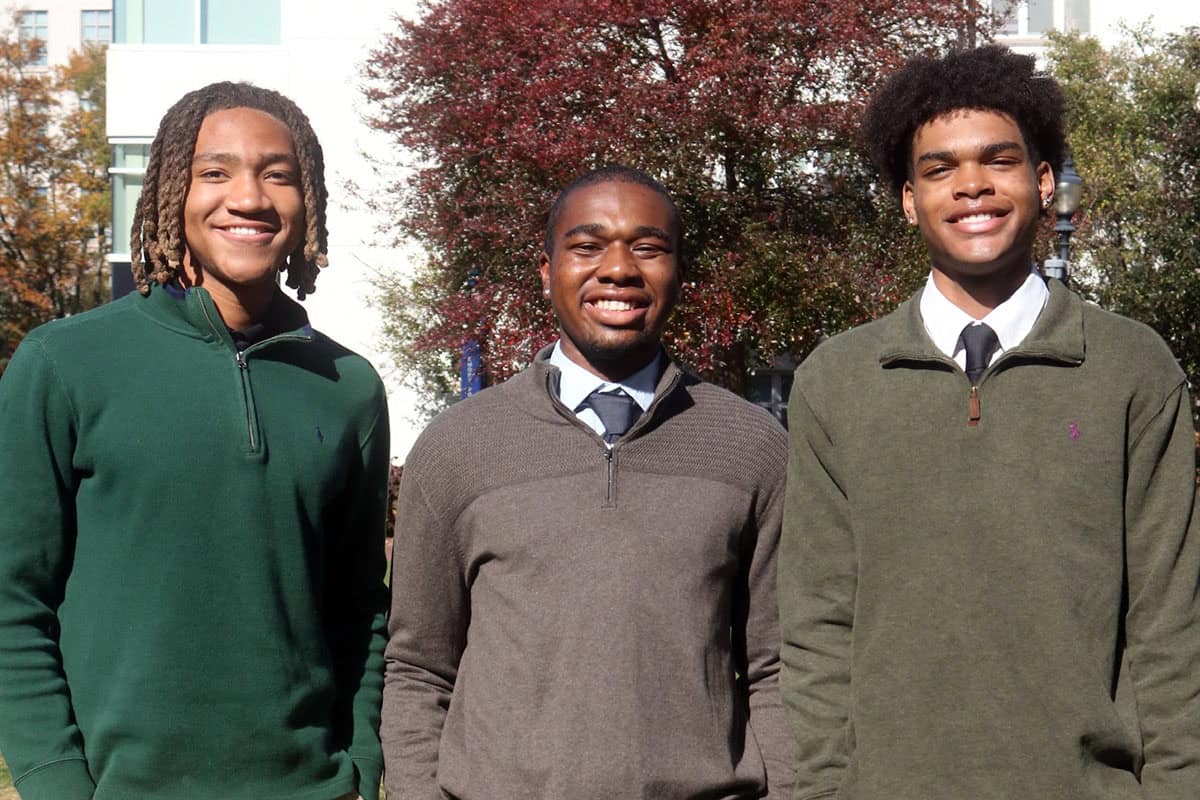
Company founder Phillip Head 28BBA has gained tremendous mileage from AI tools with what is often called “vibe coding”—an exploratory, prompt-driven approach to software development in which users iteratively guide an AI system rather than writing code line by line. Head, a finance major, built the company website using Framer, a no-code website builder. He also created an early prototype of the web application with another tool called Lovable.
“I had the ideas and creativity, but not the technical expertise,” says Head. “AI bridged that gap and unlocked a completely new journey.”
Once teammates Langston Baptiste 29BBA and Jason Bright 28BBA joined Head, the venture’s technical skill set expanded. Baptiste, a dual major in computer science and finance, and Bright, a finance major with a concentration in AI for Business, used their coding experience and a platform called Cursor to refine the application and develop new modules.
Leveling the Playing Field for Non-technical Founders
Last year, The Hatchery hired José Gomez-Marquez as Senior Director, Innovator in Residence. His background in biotech and medical devices at MIT provides a unique blend of technical expertise and entrepreneurial vision that has been invaluable to the students.
“Having José join us has been a huge advantage, especially for the AI-forward ventures,” says Garrett. “He is highly conversant with AI, particularly large language models. He’s been helping students write code, build tech stacks, and use platforms like ChatGPT and Gemini to rapidly iterate.”
Gomez-Marquez is passionate about empowering non-technical founders with AI tools while demystifying advanced technologies and scientific concepts. He advises students on creating technical frameworks and recommends other tools that may be faster and more efficient. Ultimately, he says the best part of his job is exposing students to what is possible.
According to Gomez-Marquez, AI is at its “3-D printing stage”—rapidly accelerating and democratizing innovations. It’s also leveling the playing field for non-technical innovators.
“Traditional experts often dismiss these AI tools because they know how to code, but they should pay attention—their competitors are adopting them,” says Gomez-Marquez. “A year ago, creating a working prototype would require a team of engineers; now non-technical people can spin up a beta in 48 hours. It’s a fascinating time. This technology is allowing people who once stood on the sidelines to be the characters in their own story.”
Individualized Technology Consulting
The Hatchery also pairs the teams with their own technical consultants called Innovation Consulting Fellows. These interns are trained in Human-Centered Design, Lean Startup processes, and consulting best practices, and help students through the different phases of creating a successful startup.
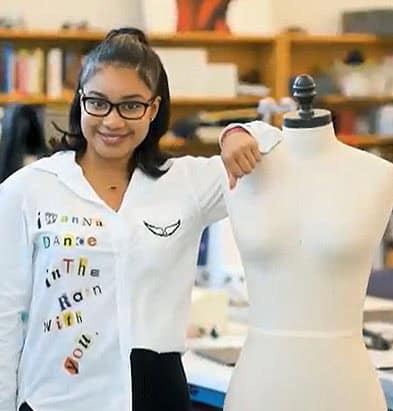
MontAIge is a fashion tech startup that uses generative AI to create custom sewing patterns based on user prompts. Mariama Barry, a computer science major at Spelman University, founded MontAIge and then partnered with Nyah Rene, a computer science major in Emory’s College of Arts and Sciences.
The Hatchery has provided Barry and Rene with invaluable resources, but perhaps the most helpful was the feedback they received from their Innovation Consulting Fellow. Their consultant, Malia Wakesho-Ajwang, chose to work with MontAIge after being impressed with their statement of work and the direction they were taking with their technology.
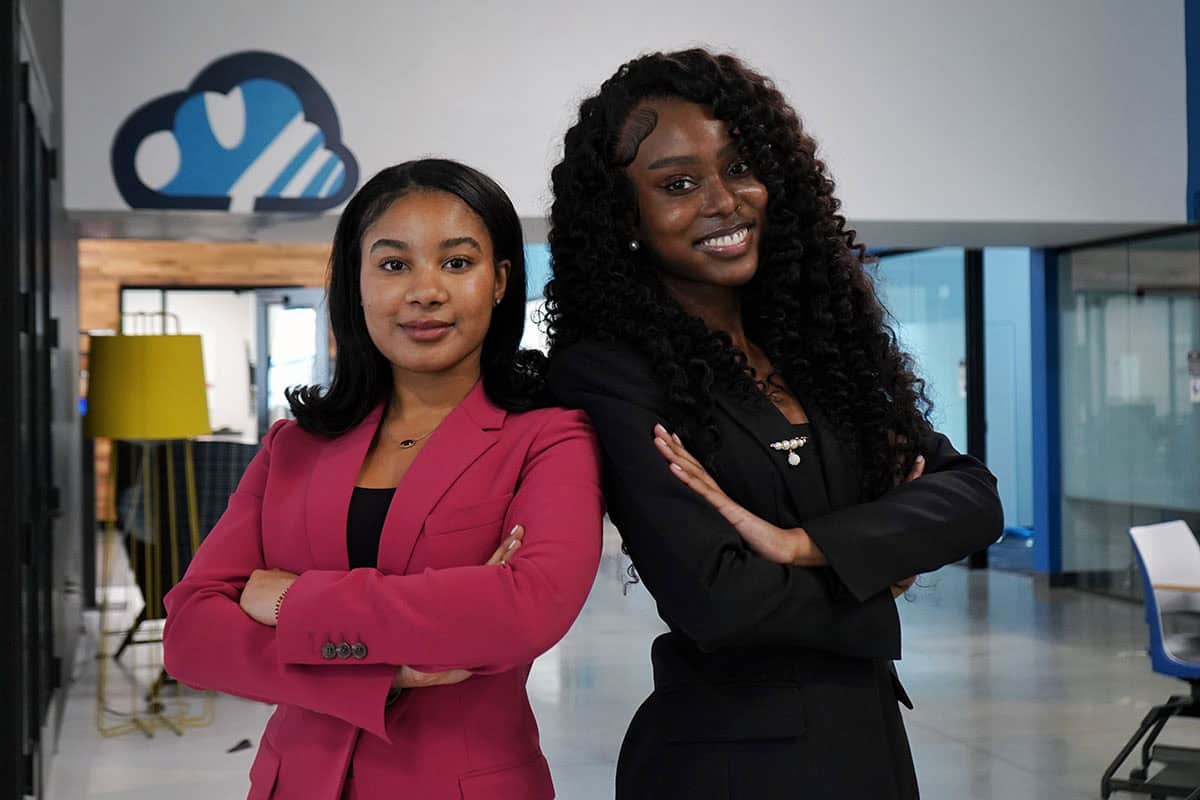
“Our consultant Malia is a computer science major like us, and she’s been incredibly helpful,” says Barry. “She advised us on proper documentation practices as we built our software, which has been a lifesaver in terms of keeping us organized.”
Industry experts on tap
Huddle is a platform that uses Retrieval-Augmented Generation (RAG) to automate document processing for surety bond underwriting. Connected by a single platform, contractors can easily share required bond approval documents with their surety brokers to reduce the effort required for requesting bond approvals.
The venture team includes economics major Hunter DeCristo, computer science majors Ethan Lee and Taeeun Kim, computer science and applied mathematics majors Andrew Lin and Nate Hu and Parsons School of Design student Sienna Noon. Their combined expertise spanning economics, software engineering, mathematics, and design has shaped Huddle’s multidisciplinary approach.
On using RAG for their project, Lin says, “We’re using AI’s computing power to answer very specific questions from a curated dataset. RAG helps us tackle hallucination and save costs while improving accuracy.”
The Huddle team chose to use the RAG solution in a highly specialized field. While The Hatchery support staff could advise on the technical side, knowledge of the surety bond industry was a different story.
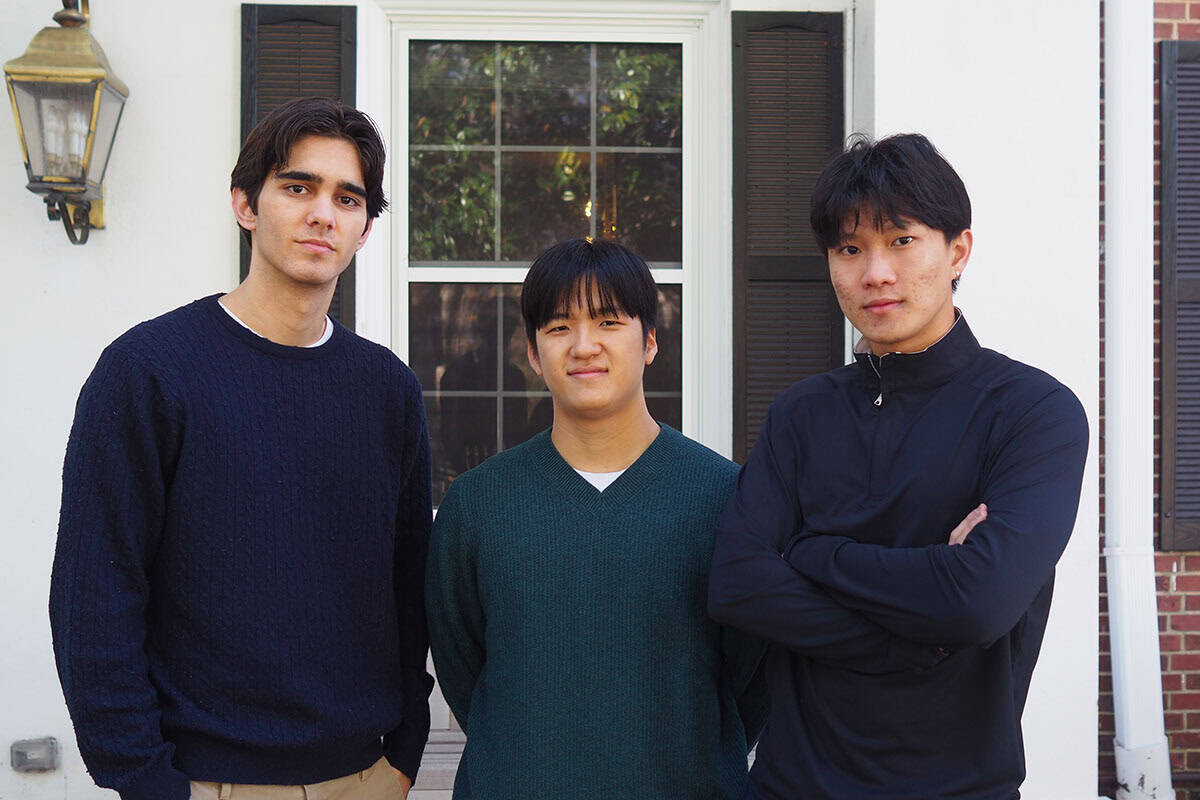
That’s where The Hatchery Coaching Network stepped in. The network is a group of business leaders available to support founders with industry and discipline-specific advice. Through the network, Huddle connected with the leader of an Atlanta-based angel investment group, which led to an invitation to a major industry event. There, the team met the CEO of a fast-growing fintech company and later spoke with the firm’s head of compliance. These conversations offered valuable insight into the operations and regulatory demands of serving the surety market.
“The Hatchery helped us meet the right people and be in the right places to tackle the tough challenges we faced early on,” says DeCristo. “Being able to leverage The Hatchery’s extensive network has greatly supported our venture’s journey.”
Putting it all together
The Hatchery Incubator’s holistic approach gives student innovators everything they need to launch a successful startup, including guidance on finance, business development, and technology; hands‑on workshops; regular accountability check‑ins, and seed grant funding.
MontAIge’s Rene says that The Hatchery mentorship and technical guidance have been pivotal: “The Hatchery offered resources that helped us push our venture from a basic idea into something viable. Between the mentorship, pitch workshops, LLC formation guidance, and help refining our demo, they set us on a positive path. It’s especially helpful that the people coaching us have a lot of experience with AI.”
Barry adds, “The name MontAIge comes from ‘montage’—smaller pieces coming together to create one larger piece. I think that’s a good analogy for how great things come together. For example, The Hatchery program brought together all the many resources new entrepreneurs could possibly need, resulting in a venture I feel very proud of.”
The Hatchery Incubator AI Projects:
Helping H.A.N. (Head and Neck) is building the first AI-supported digital health platform for head and neck cancer survivors that fills the critical hydration monitoring gap, while integrating nutrition tracking, depression screening and caregiver engagement to improve overall well-being and prevent avoidable ER visits.
Huddle is an enterprise-grade system for requesting, processing and approving surety documents to support the bond approval process.
Infervia transforms healthcare regulatory monitoring from manual document review into automated AI intelligence for compliance professionals.
J2 DetectAI is a cloud-based platform powered by advanced deep learning algorithms that analyze cardiac imaging to identify subtle structural and functional changes, enabling earlier detection and improved patient outcomes.
MedEase is a student-centered post-injury recovery companion—a multi-AI agent SaaS platform that simplifies medical care, supports lifestyle rebuilding, and provides geospatial campus accessibility mapping.
Mira is a safety-first navigation layer for women that works in tandem with Apple and Google Maps, layering on real-time, Waze-style peer input about route safety to help women navigate cities more confidently.
MontAIge is an AI sewing pattern generator that helps designers and creatives without vast fashion expertise craft designs and follow the garment construction from start to finish, while simplifying the manufacturing process.
Phil’s Financials is a gamified financial literacy app for low-income high school students featuring live market data, news headlines and career pathways in finance.
Soléne is an AI-powered skin health platform that provides personalized, evidence-based skincare guidance through daily scans, ingredient-level recommendations and clinical integration.
ThreadNotion transforms sellers into storytellers in fashion retail using AI-powered playbooks rooted in persuasive storytelling and authenticity.
The Life of Mine is a support app that uses an interactive village of AI-driven characters to help people improve daily habits, manage mental health and sustain long-term positive change.
Vera Vision leverages computer vision to streamline managerial tasks in fast-casual restaurants, reducing costs and saving time while enhancing operational efficiency.