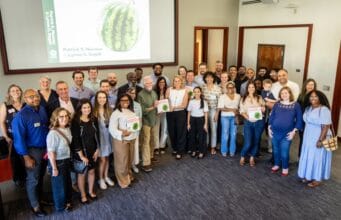


A marketing simulation. A mining company confronting fatal safety failures. A new manager overwhelmed by competing demands. A multibillion-dollar bet on a new airplane. Four members of Goizueta’s Class of 2026 share the classroom lessons they expect to carry long after graduation.
Business school cases often begin with a deceptively simple question: What would you do?
Then the complications arrive.
The numbers point one way. People pull in another. Short-term performance competes with long-term strategy. A decision that looks clean in a model becomes considerably less clean once employees, customers, competitors, values, and uncertainty enter the picture.
For four accomplished members of Emory University’s Goizueta Business School Class of 2026—Ginger (Abblitt) Rondinelli 26MBA, Jasmine King 26MBA, Michael Coyne 26MBA and Sean Titus 26MBA—some of the classroom experiences that resonated most were those that confronted exactly that kind of ambiguity.
Asked to identify the case study that made the greatest impression on them, they chose four very different business problems. Their takeaways, however, share a common thread: in the real world, the hardest decisions rarely belong neatly to one discipline—and analysis is only part of leadership.
Responses have been edited for length and clarity.
Ginger (Abblitt) Rondinelli: Every Decision Connects to Another
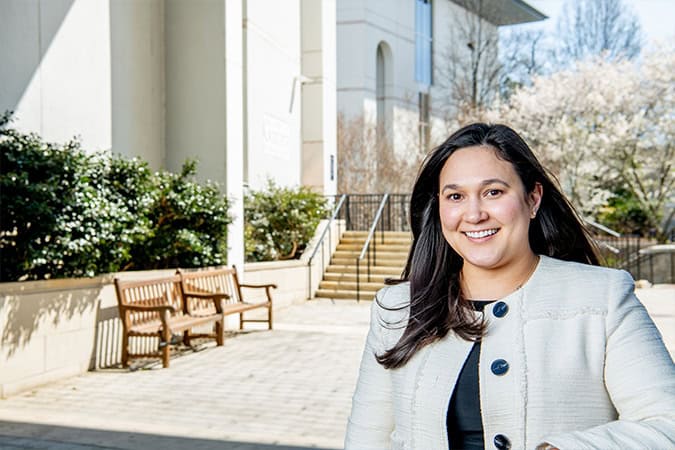
Hometown: Atlanta, Georgia
Before Goizueta: Retail Marketing Manager, Oldcastle APG
After graduation: Product Manager, Reliance Worldwide Corporation
What was the most impactful case study you had in business school, and what was the biggest lesson you learned from it?
One of the most impactful cases for me was PharmaSim, a multi-year marketing simulation where we managed a cold medicine brand in a competitive over-the-counter market. Instead of analyzing a static case, we had to make real decisions each round on pricing, advertising, product positioning, and distribution while competing against other teams.
The biggest lesson was how interconnected every decision is. A pricing change affects demand, which impacts production, retailer relationships, and brand perception. Early on, it was easy to focus on one lever, like advertising or price, but the simulation made it clear that strong performance comes from aligning the entire strategy across product, promotion, price, and channel.
It reinforced that marketing is not just creative messaging. It is a series of disciplined strategic choices, backed by data, where small misalignments across decisions compound quickly in a competitive market.
Jasmine King: Values Matter Most When They Carry a Cost
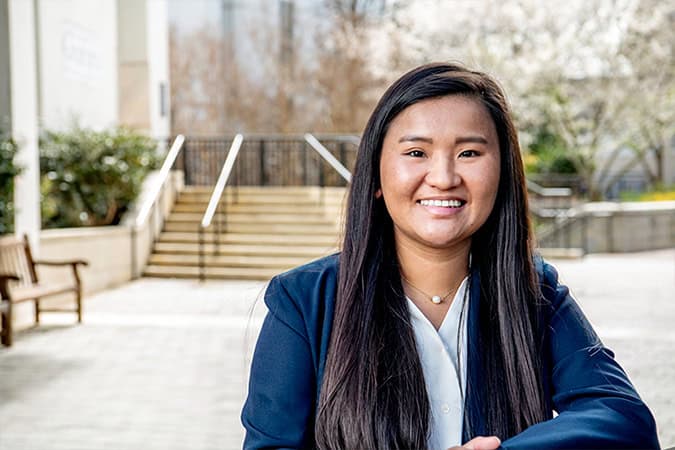
Hometown: Buffalo, New York
Before Goizueta: Pivot Precision
After graduation: CEO of Pivot Precision while finishing her MD at The Ohio State University
King was also featured by Poets&Quants among its 2026 Best & Brightest MBAs, a recognition highlighting standout graduates from full-time MBA programs.
What was the most impactful case study you had in business school, and what was the biggest lesson you learned from it?
Culture is often shaped in moments of great tension, when leaders are forced to choose between competing priorities under intense scrutiny. While I understood this principle intellectually, reading the HBR case on Cynthia Carroll and her decision to shut down a major Anglo American mining operation made it tangible.
Following multiple worker fatalities, Carroll halted production to address systemic safety failures despite immense financial pressure and internal resistance, proving that leadership credibility is established through action, not rhetoric. By prioritizing worker safety over short-term output, she demonstrated that values are only meaningful when they carry real cost.
The case reinforced for me that ethical leadership is most visible when it requires sacrifice. In industries like healthcare and manufacturing, where human lives and livelihoods are directly affected by executive decisions, culture is ultimately defined by what leaders are willing to protect when performance and principle collide.
Michael Coyne: Management Requires Knowing People, Not Just Roles
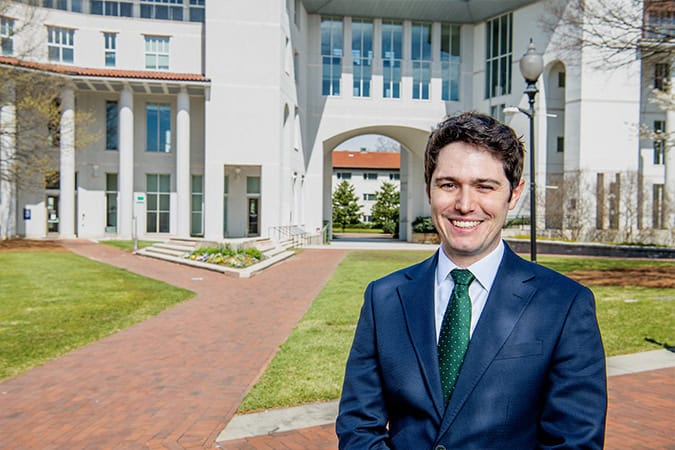
Hometown: Golden, Colorado
Before Goizueta: Project Manager, DAI Global
After graduation: Consultant, Bain & Company
What was the most impactful case study you had in business school, and what was the biggest lesson you learned from it?
During a core semester course taught by Professor Lynne Segall, we covered an Harvard Business School case called “Erik Peterson at Biometra” that resonated with me. The case discusses a recent MBA graduate’s struggle to maintain competing priorities and obligations in his first managerial role. He fails to do so in the end and experiences a professional setback.
The complicated array of responsibilities facing the protagonist felt reminiscent of my own career before coming back to business school, and I spent time speaking with Professor Segall in office hours trying to make sense of it.
I came away with two main lessons: first, management is hard, and there’s never going to be enough time to cover all one’s bases by oneself. That means relying on others is critical.
Second, it’s vital to understand your team, your supporters, and your supervisors as people, not just function-fillers, and factoring their needs, communication styles, and strengths into your own decision-making is always a prerequisite to doing good work.
Sean Titus: The Model Is Only Part of the Answer
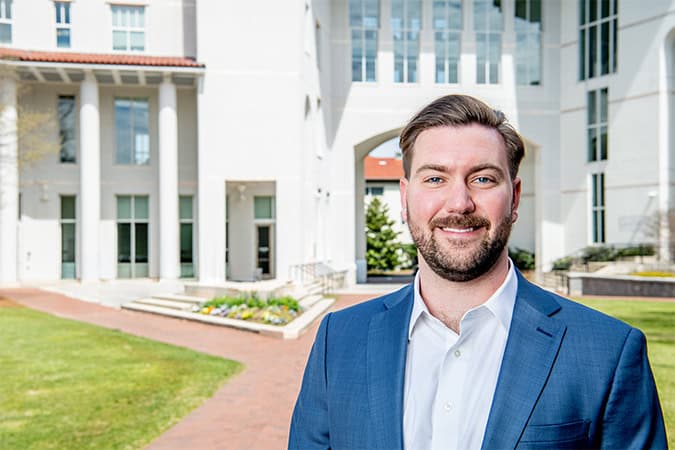
Hometown: Washington, D.C.
Before Goizueta: Senior Analyst – Inventory Strategy & Solutions, The Home Depot
After graduation: Consultant, Boston Consulting Group
What was the most impactful case study you had in business school, and what was the biggest lesson you learned from it?
The most impactful case for me was the Boeing 7E7 decision. It stood out because it brought together many of the core themes of business school in one discussion. We had to evaluate a multibillion-dollar investment using finance tools, think through competitive dynamics with Airbus from a strategic lens, and consider operational risk, customer demand, and leadership judgment at the same time.
It showed me that real business decisions rarely fit neatly into one functional area the way classes sometimes do.
The biggest lesson I took away is that the right strategic decision does not always look obvious in a model. Business school has reinforced that strong leaders combine analytical rigor with judgment, especially when facing uncertainty, and make decisions that balance financial discipline with long-term positioning and value creation.
When the Framework Runs Out
Across the four cases, the subject matter changes dramatically, but the lessons build on one another.
Rondinelli’s simulation demonstrates how quickly a decision in one part of a business can ripple through the rest. King’s case raises the stakes by asking what happens when performance comes into conflict with values. Coyne focuses on the people responsible for making an organization work. Titus arrives at the limits of analysis itself: a model can inform a decision without making it for you.
That progression captures something fundamental about management education.
Frameworks can help leaders understand a problem. Models can quantify tradeoffs. Cases allow students to confront difficult decisions before encountering similar ones in their careers.
But eventually, someone still has to decide.
For these four Goizueta graduates, some of the lessons most likely to endure are about what happens at precisely that moment.
The Two-Year MBA prepares students to think critically, lead confidently, and turn business knowledge into meaningful impact. Learn how Goizueta’s immersive MBA combines rigorous academics, hands-on leadership development, and real-world experience with the time and flexibility to explore, specialize, and grow.