

In a New Year’s message shared with Poets & Quants, Dean Gareth James reflects on his resolution to champion the enduring value of academic discovery. Read the full article on Poets & Quants featuring resolutions across business schools.
My New Year’s resolution is simple: to more forcefully tell the world about the extraordinary impact that higher education—and business schools—have on society.
There’s been a lot of discussion lately about whether universities still matter. I think the confusion stems from the fact that academic research often works on a decades-long timescale. It can be slow, rigorous, and intentionally unflashy—which means its biggest contributions are often hiding in plain sight.
But the impact is undeniable.
From 1996 to 2020 alone, academic technology transfer produced 580,000 inventions, 19,000 startups, more than 200 drugs and vaccines, 6.5 million jobs, and $1 trillion in U.S. GDP.
That’s an astonishing return for the investment we make in higher education. And it doesn’t include the thousands of discoveries being made right now that will reach the public in the years ahead.
At Emory, this story is even more dramatic. Over the last 40 years, research conducted at Emory has resulted in more FDA-approved drugs and vaccines than any other university in the country. That includes game-changing HIV treatments that helped transform a fatal disease into a manageable condition, and the development of molnupiravir—one of the first oral antivirals for COVID-19.
My own research area, AI, is a perfect example. While ChatGPT was created by a private research lab, its foundation rests on 70 years of academic advances—in mathematics, computer science, linguistics, psychology, operations research, and statistics.
Universities didn’t build the product, but we built the science and the scientists that made it possible.
The truth is we are all beneficiaries of this quiet, persistent engine of discovery. We’ve become so accustomed to progress—vaccines, GPS, the internet, genomics, clean water systems—that we forget that progress often begins in universities. And we ignore that at our peril.
When we look across our own campus today, Goizueta faculty are generating insights that are shaping the future of business and society.
Take generative AI, for example. A recent study co-authored by Vilma Todri and Panagiotis Adamopoulos asked a question many marketers are grappling with: How well does AI actually perform in real advertising settings? Combining lab experiments with Google Ads tests, they found that ads created with visual generative AI can outperform human-designed ads, boosting click-through rates by up to 19 percent. But there’s a catch—simply labeling an ad as AI-generated can sharply reduce its impact. The work demonstrates both the promise and the pitfalls of AI in marketing, offering businesses evidence-based guidance as they navigate a fast-changing digital landscape.
Other Goizueta faculty are investigating the human and societal dimensions of business.
Melissa Williams’ research shows how female leaders face disproportionate scrutiny of their personal lives—and how that scrutiny can quietly discourage women from pursuing senior leadership roles. Michael Lewis is exploring the explosive growth of gaming and esports, revealing how modern fandom blurs the line between watching, playing, and spending. Suhas Sridharan raises important questions about ESG investing, demonstrating how conflicts of interest among ESG raters can inflate scores without delivering better social or environmental outcomes.
The United States has long relied on a three-legged stool of innovation: universities, private industry, and the federal government. If one leg weakens, so does our global competitiveness.
That’s why my resolution for 2026 is to better articulate the essential role that universities—and business schools—play in shaping a thriving society and economy.
We can’t assume people understand the value of academic research. We need to trumpet it clearly, proudly, and often.
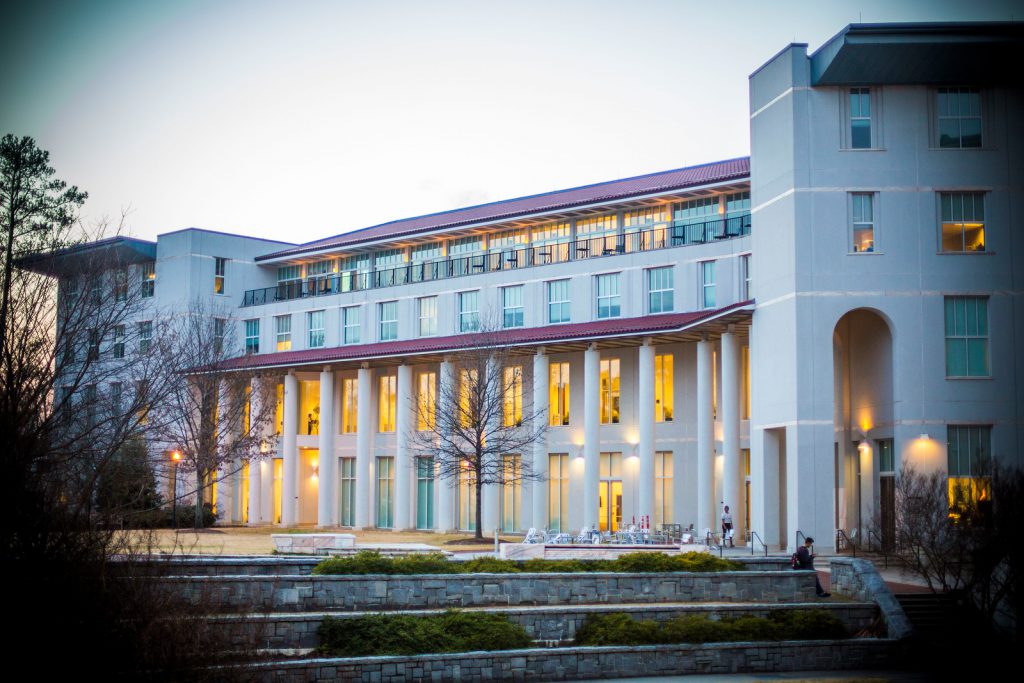
At Goizueta, I’m fortunate to lead a school that strengthens all three legs of that stool. Our faculty produce research and lead courses that expand human knowledge. Our graduates fuel industries and grow and launch companies. And our partnerships—across Atlanta, across industries, and across the globe—demonstrate what happens when education, innovation, and community work together.
Progress isn’t inevitable. But it is possible, when we commit to supporting the people and institutions that make it happen.
That’s the story I intend to tell more loudly in the year ahead.
Gareth James
John H. Harland Dean Emory University’s Goizueta Business School
Read the full article on Poets & Quants featuring resolutions across business schools.