

This excerpt, pulled from Associate Professor of Organization & Management Wesley Longhofer‘s “Unusual Business” Substack, highlights student research from Goizueta’s Business & Society class.
On Black Friday in 2011, Patagonia released a provocative ad in the New York Times asking its customers to do something, well, unusual. They asked their customers to not buy a Patagonia jacket.
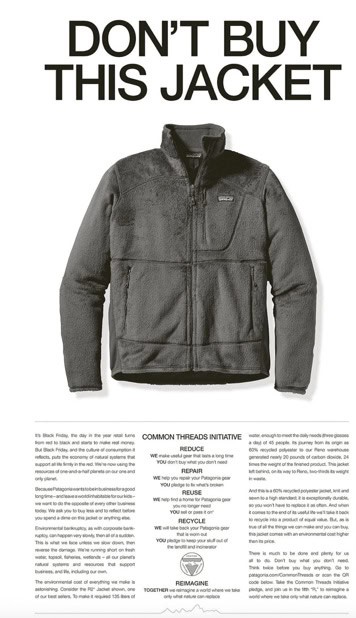
Patagonia explained that its best-selling fleece required significant water, energy, and materials to produce. So, the company asked people to think twice before purchasing a new one and instead repair the one they already had.
This ad is the stuff of lore in sustainability and, not surprisingly, Business and Society. (It is a popular quiz and trivia question every semester.) Interestingly, it also didn’t work, at least in terms of getting people to buy less. Sales at Patagonia actually grew 30% after the ad was released, making it clear that growing sustainably is easier said (or marketed) than done. (For more on the ad and Patagonia’s sustainability journey, check out David Gelles’ excellent new book, Dirtbag Billionaire: How Yvon Chouinard Built Patagonia, Made a Fortune, and Gave It All Away [Simon & Schuster]).
The Patagonia example illustrates how overconsumption is as much a systems problem as it is one about individual choices. For Patagonia to sell less, it would perhaps have to produce less overall, which would make it harder, if not impossible, to keep the company going financially. And, 14 years later in their latest impact report, Patagonia still admits that little they do is ever truly sustainable – but they are making progress and that matters.
We can see another example of the systemic problem when we look at plastic production. Did you know that more than half of all plastics in the world were produced since we (or those of us in class, at least) were born? We didn’t.
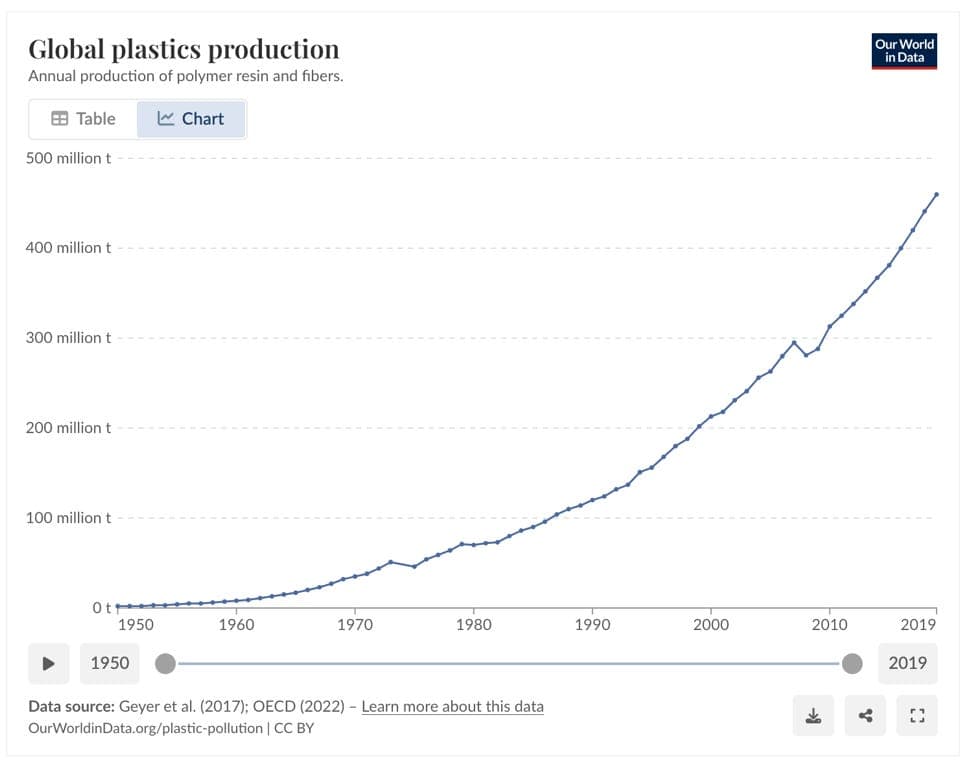
In her recent book, The Problem with Plastic, Judith Enck (with Adam Mahoney) describes how plastic pollution has reached epic proportions – and the solution to it is not recycling. Instead, as with many problems we discussed this semester, it requires systemic solutions that slow down consumption of plastics entirely.
Check out more on the Unusual Business Substack. The blog explores why changing consumption habits is so difficult and examines efforts within the fashion industry to do so responsibly.
Read more here.