

New research from Goizueta’s Ruomeng Cui suggests some recycling policies may unintentionally discourage resale and reuse among environmentally conscious consumers.
The world has a waste problem. A big one.
Human beings generate well over 2.5 billion tons of municipal solid waste every year—household trash, clothes, paper, electronics, and food stuff that end up on our streets, at the neighborhood dump, or piled into landfills in towns and cities around the planet.
The World Health Organization estimates that by 2050, that figure will almost double to 4 billion tons, making waste a massive and growing threat to our health and wellbeing. Tens of thousands of tons of plastics make their way into lakes, rivers, and seas every day, disrupting ocean carbon sequestration, accelerating climate change, and entering the water we drink. Meanwhile, a host of health issues from birth defects, heart disease, and cancers have been linked to dumpsite leaks and open burning practices at burn pits. The Environmental Protection Agency estimates that more than 14% of all U.S. methane gas comes from landfills today.
Any regulatory effort that is too narrowly focused on recycling can inadvertently undermine other pro-environmental behaviors.
Ruomeng Cui, Goizueta Foundation Term Associate Professor of Information Systems & Operations Management
Managing human waste is an urgent imperative for governments and society, and in recent years policymakers worldwide have doubled down on regulatory efforts in waste sorting and recycling. The U.S. Environmental Protection Agency has set ambitious targets to recycle 50% of packaging by 2030, while China has articulated its action plan to treat and repurpose 4.5 billion tons of solid waste in the same timeframe.
The private sector is also yielding its own mechanisms, and they are promising.
Resale and Reuse
The resale market—where secondhand goods are bought and sold—has surged in the last few years, growing more than twice as fast as traditional retail. As the demand for secondhand clothes, electronics, and other items continues to soar—much of it fueled by shifting consumer values, cost savings, and user-friendly, AI-powered apps like eBay, Vinted, and Depop—secondary markets are predicted to swell to $350 billion by 2028. By 2030, the global secondhand clothing market alone is expected to approach $340 billion, or about 10% of all apparel spend worldwide—redirecting a significant volume of textiles away from landfill and incineration.

But all this reuse growth could come under pressure, warns Ruomeng Cui, Goizueta Foundation Term Associate Professor of Information Systems & Operations Management. And ironically, it’s precisely because of public sector efforts to curb waste through recycling.
“By making recycling easier and more of a social norm, city councils and regional governments could be creating a kind of behavioral trade-off among citizens,” says Cui, “It’s a paradox. Where before people might have felt more motivated to sell things like clothes for environmental reasons—concerns about landfill and so on—now they’re being encouraged to leave waste management to the local authorities. Put it this way: if you’re confident that city hall is taking care of sorting and recycling the stuff you don’t need, there’s way less incentive to go to the effort of listing those pre-loved jeans or that gaming console you’ve had lying around for ages.”
Instead of complementing reuse, policy-driven recycling could inadvertently displace it—and there’s evidence that this is already happening in one of the world’s major capitals.
Compulsory Waste Sorting in Shanghai
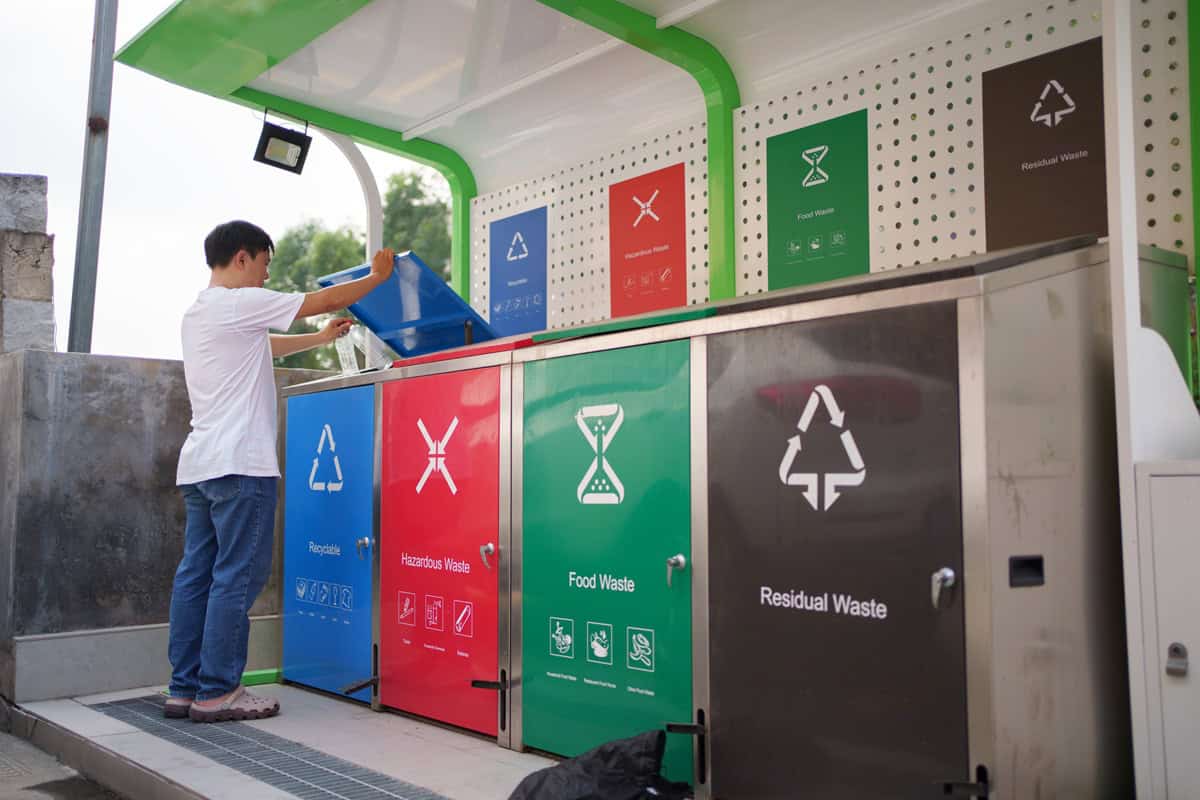
Cui and colleagues looked at the impact of sweeping waste management regulations that came into effect in 2019 in Shanghai—a new policy requiring households to sort waste into recyclable and other categories and use designated disposal channels across the city. To raise awareness, Shanghai authorities launched a campaign which quickly went viral under the now-famous hashtag: “What kind of trash are you?”
To gauge whether these measures were having meaningful impact on consumer behavior in the resale market, they collected a wealth of data from Xianyu (Idle Fish), one of China’s foremost consumer-to-consumer marketplaces operated by e-commerce behemoth Alibaba. Cui and her colleagues sifted information on listings, product categories, posting and transaction timing, demographics, and user activity before and after the new regulations came into effect, comparing behavioral changes in Shanghai with other cities where the policy has not yet been implemented. In total, they analyzed seven months of granular transaction data.
“The platform is one of the busiest in China with more than 20 million daily active users, 60 million sellers and $14 billion in gross merchandise volume. Our sample set covered around 363 million listings of used goods from millions of individual sellers, giving us a real insight into behavioral shifts at scale.”
The Gen Z Factor
Crunching all this data, Cui and her colleagues found something striking. While the overall volume of listings for resale remained pretty much intact before and after recycling mandates came into force in Shanghai, there was a marked impact on the behavior of the youngest subset of Xianyu users. These Gen Z sellers were posting significantly fewer goods on the platform. In fact, listings made by this cohort dropped by 8.42% as soon as the new regulations took effect.
“Across the entire city-level population, we don’t find major changes in behavior before and after the policy shift,” says Cui. “But when we disaggregate the data by age, there’s really clear evidence of a significant contraction in participation among Gen Z users, aged between 15 and 25. They seem to be far more sensitive to the changes in recycling regulations than older cohorts.”
Our study provides real evidence that younger consumers are particularly sensitive to policies around the management of waste.
Ruomeng Cui
Cui believes that this is down to a stronger sense of environmental responsibility among younger generations.
Gen Z, she says, are more likely to view resale markets as an alternative means of circulating and effectively recycling used goods to prolong product life cycle—a hypothesis borne out by user behavior in other pro-environment initiatives in China.
“Ant Forest is a viral app that gamifies environmental action. When you look at the user base here, around 65% of the players are under the age of 28—the same Gen Z demographic whose behavior is so markedly different in our resale market study. These are the same young, eco-conscious individuals who were very likely using the secondary market in China as a trusted channel for reuse, and by extension recycling.”
To test this, she and her colleagues directly interviewed a sample of Gen Z Xianyu users. Their responses shed light on how young people might see the trade-off when environmental responsibility shifts from individual acts—listing and selling used goods—to civic control through regulation. One respondent adds: “I think waste sorting is a good thing—it reduces pollution. But it also makes people feel that as long as they sort their trash, they’ve done their part, instead of thinking about reusing like before. So it kind of makes us think more about recycling, not so much about reusing like before.”
Policy Implications
When governments implement formal recycling regulations, young environmentally conscious users are likely to perceive the new system as convenient, effective, and socially endorsed—a practical alternative to the informal reuse market. However well intentioned, these recycling policies not only have the potential to displace resale, but they also potentially weaken overall sustainability by substituting longer product life cycles with single-use recycling.
“Any regulatory effort that is too narrowly focused on recycling can inadvertently undermine other pro-environmental behaviors, and policymakers really need to take this into account,” says Cui. “Policies must be built on integrated strategies that simultaneously promote recycling and reuse—ensuring that they are aligned and not in competition.”
One intervention here could involve public education campaigns before, during, and after the implementation of new regulations: formal and informal media messaging, signage near bins and recycling spots, or community volunteering geared at promoting the value of resale and reuse alongside recycling efforts.
Policies must be built on integrated strategies that simultaneously promote recycling and reuse—ensuring that they are aligned and not in competition.
Ruomeng Cui
Meanwhile, secondary platforms themselves would do well to mitigate the unintended consequences of recycling regulations by streamlining and improving their own operations, says Cui. Things like high transaction costs, price uncertainty, and negotiation friction can discourage users from posting on resale sites. Vinted, Depop, eBay and others might want to double down on their own efforts to optimize design and user experience, while keeping costs as low as possible.
“We would urge the public sector to think more broadly, predict impact, and be cognizant in their efforts to tackle waste of the huge value that resale markets offer in the fight to protect the environment and human wellbeing within it,” says Cui. “There may well be scope for creative collaboration between policymakers and resale platforms to highlight the complementary value of recycling and reuse, through communication, incentives, and education.”
“Our study provides real evidence that younger consumers are particularly sensitive to policies around the management of waste,” she adds. “The challenge is to harness that sensitivity in ways that strengthen, rather than fragment, the circular economy.”
Explore the work of Goizueta Business School’s faculty and discover how their research, expertise, and thought leadership are shaping business and society.