
New research from Goizueta’s Ruomeng Cui shows how causal AI can optimize last-mile delivery—and improve decision-making far beyond logistics.
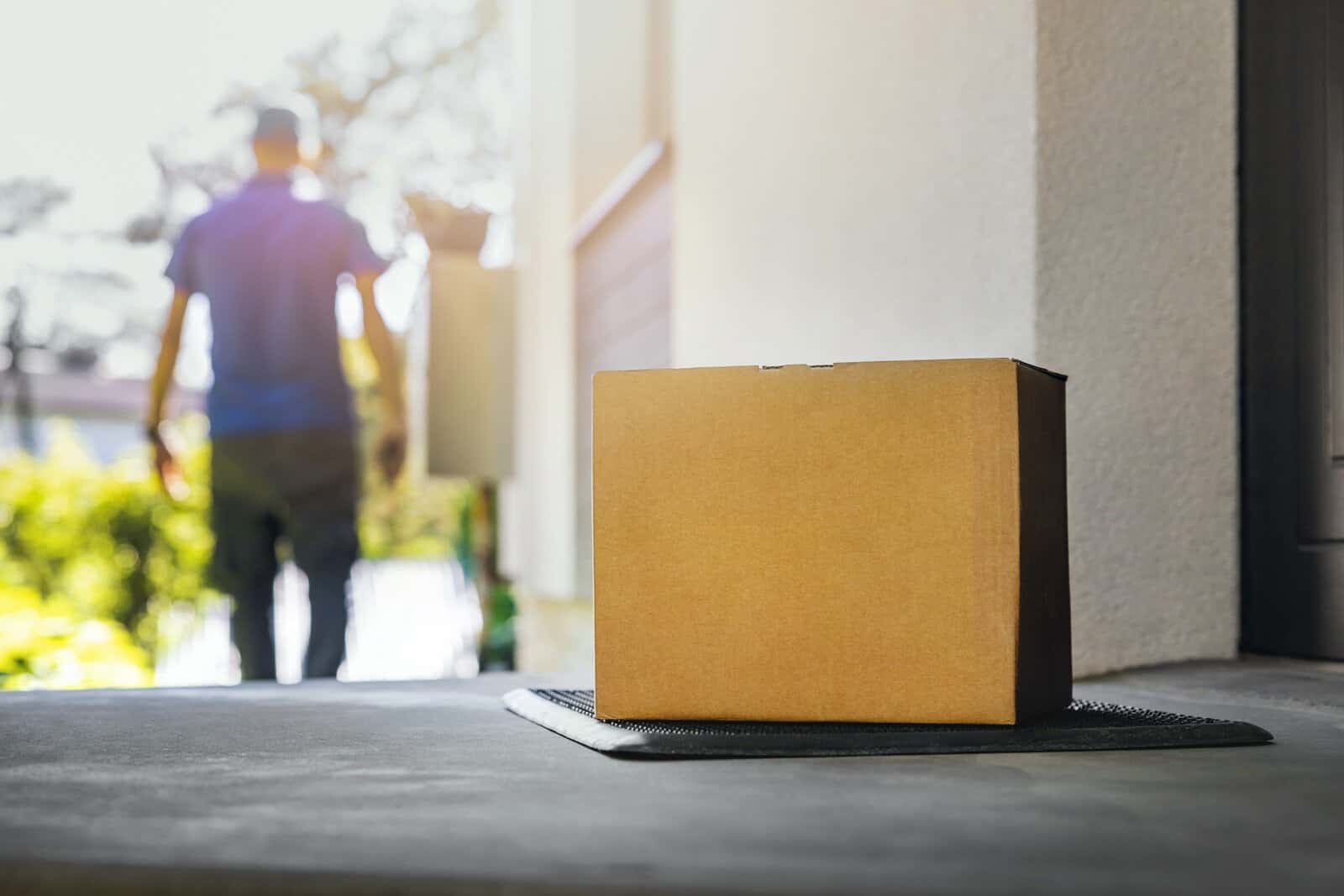
In logistics, the final leg of a product’s journey—from local distribution point to the customer’s doorstep—is something of a conundrum. While it typically represents less than 5% of the total distance, that last mile can account for up to 30% of transportation costs.

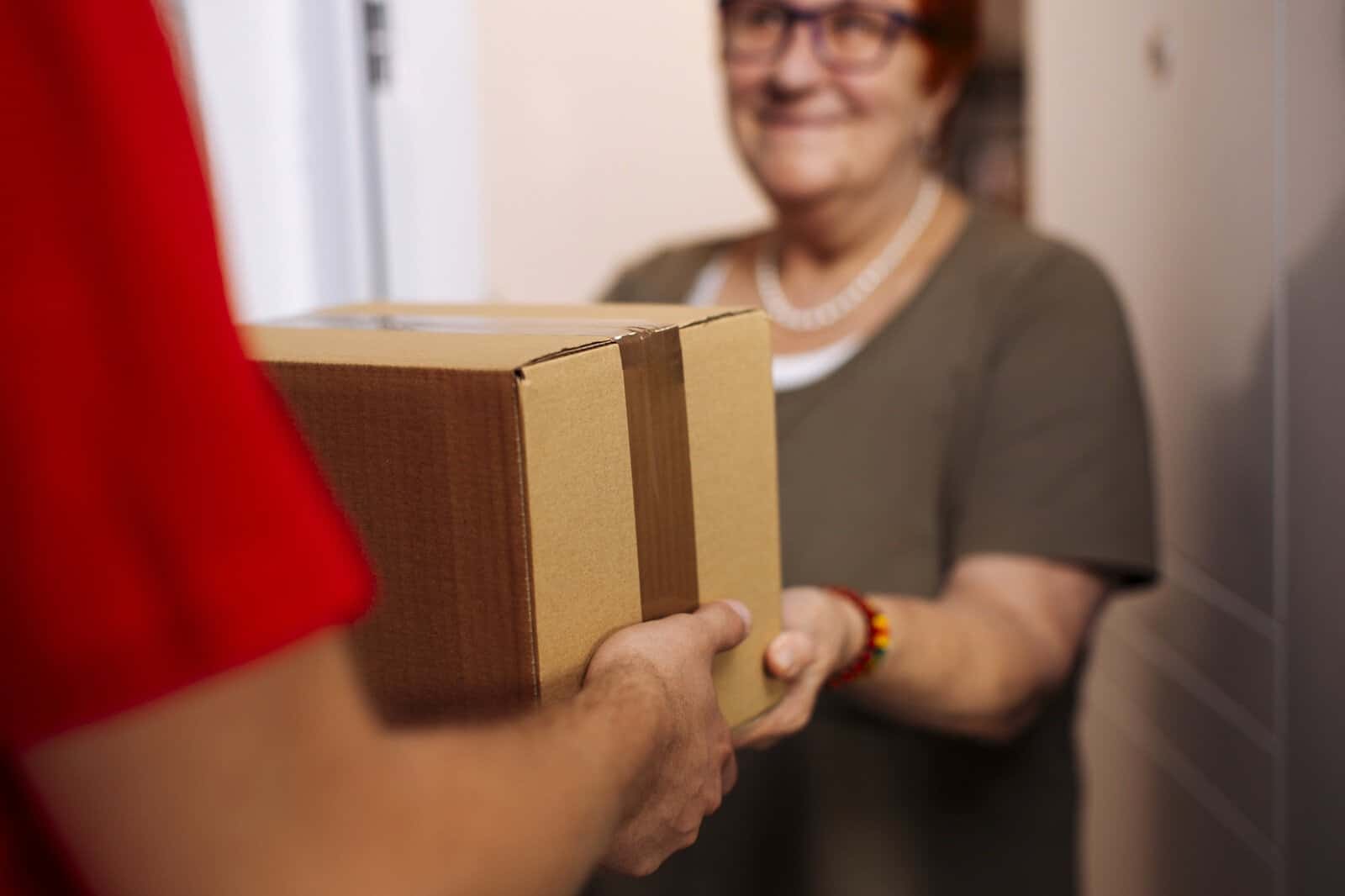
The reason lies in economies of scale. Moving truckloads of goods between warehouses and distribution centers spreads costs across large volumes—routes are predictable and operations efficient. The last mile involves delivering to individual households, often one package at a time, in congested and variable traffic conditions. Each additional drop adds labor costs, time, fuel, and operational complexity. For decision makers, the question is: is home delivery actually worth the expense?
A new study by Ruomeng Cui, associate professor of information systems and operations management, suggests that it can be—but only if you can pinpoint those customers that create enough value to make it worthwhile. And she has developed an algorithm that does just that.
A Natural Experiment
Cainiao is the logistics arm of Chinese tech and e-commerce behemoth, Alibaba. Over the past decade, they have established more than 100,000 pickup stations nationwide for customers to self-collect orders. When Cainiao decided in 2021 to trial home delivery—a response to customer pressure and intensifying competition from JD.com and other retailers offering premium delivery service—it afforded an opportunity for Cui and colleagues to analyze the impact in real time.
“This was a kind of natural field experiment,” says Cui. “We collaborated with the Cainiao team to analyze sales data and drill down into any significant changes in customers’ spending habits both prior to the home delivery rollout and in the year following it. The idea was to help settle the debate around the upsides in offering this service—to see whether the convenience of having things delivered to their doorstep would encourage customers to spend more, or not.”
Cui and her colleagues looked at purchasing activity across 100,000 Alibaba customers, around half of whom were eligible for home delivery, between April 2020 and March 2022. The granularity of the Cainiao data allowed the researchers to assess the overall impact while identifying which customers changed their purchasing behaviour and by how much—whether any additional purchasing behavior was widespread and uniform or concentrated among certain groups or individuals.
When you make it more convenient for your customers to receive their goods directly, you incur higher costs, and you burn money for sure, but on the flip side you will see a real increase in revenue, which settles something of the debate.
Ruomeng Cui, Associate Professor of Information Systems & Operations Management
Crunching the data, Cui and her co-authors found that home delivery does have a marked effect on sales and revenue. Those customers who could benefit from the service increased their spending by an average of 31%. Orders went up by almost 14% and the average value of each order rose by 2.5%.
“When you offer the full last mile delivery service, it can boost your sales significantly. When you make it more convenient for your customers to receive their goods directly, you incur higher costs, and you burn money for sure, but on the flip side you will see a real increase in revenue, which settles something of the debate,” says Cui.
The issue is that the increase in spending is uneven. Digging into the results, Cui and colleagues found a lot of “heterogeneity” in customer responses. Factors such as location and distance from existing pickup stations influenced behaviour: some customers increased spending substantially when offered home delivery, some showed little change, and others spent less. The constraints around delivery costs and capacity make identifying the high-value customers—those who will spend more—an absolute priority, says Cui.
“We know that home delivery is complex, costly and that capacity is limited. Offering the service to your entire customer base is not a great strategy if you’re going to end up servicing customers who will generate very little additional revenue. A more profitable approach is to pinpoint and target those specific customers who are most likely to increase their spending enough to offset the additional delivery costs,” she says. “And fortunately, technology enables us to do this.”
Optimized Customization, Maximized Benefits
Cui and her colleagues have created an algorithm that uses causal machine learning—an emerging branch of AI that can determine which kinds of actions or policies will produce desired results. Where simpler models can predict which customers are likely to up their spending if offered home delivery, Cui’s algorithm goes a step further, by integrating and offsetting the logistical and capacity constraints attached to each individual: how complex and costly it would be to deliver goods to their doorstep.
This is advanced, state-of-the-art technology, she says, that should take the guesswork out of who to ship to directly and why.
“We started out on the basis we could use AI to narrow down our target customers for home delivery—which individuals might not buy more, those who’d maybe increase their spend by a couple of cents, and those who’d be more likely to increase their purchases by $20, say, or more. This could help us create a kind of ranking of responsiveness, from highest to lowest,” says Cui. “And from there, the next phase is to allocate your limited last mile delivery service resource to these customers, again focusing on the highest-ranking customers who will deliver most value.
The magic happens when you then tweak that ranking by adding in the logistical constraints of this customer group. By factoring in how much capacity each of these high-value customers will need, you get a much sharper picture of exactly who you should be targeting, she says.
A more profitable approach is to pinpoint and target those specific customers who are most likely to increase their spending enough to offset the additional delivery costs… and fortunately, technology enables us to do this.
Ruomeng Cui
“A straightforward algorithm can tell you with certainty which of your customers are buying more. So, you know that a bunch of people will make an extra order if you offer them home delivery. But we also know that their behavior is pretty different. One household will jump from nine to 10 orders. Another will increase from zero to one—from buying nothing at all to making that one new order. And in terms of shipping to them, when you factor in the costs and the time, fuel and complexity involved, these customers represent very different value to the company.”
Cui’s model takes these trade-offs into account. For example, if a delivery network has capacity for 10 additional packages, it may be more profitable to serve 10 newly activated customers who are placing one extra order each than to devote the same capacity to a single customer whose spending increases only marginally.
“You’ve only got room for 10 packages in the back of your truck, so who do you focus on? The 10 new customers who are purchasing an order from you and giving you 10 times the revenue? Or that guy who’s ordered a bit more in terms of revenue—but whose stuff is now filling your truck so you can’t deliver to the others? And remember: if he was already ordering a ton of stuff before you started shipping to the doorstep, he’s likely to be happy to keep on collecting it himself from the storage point,” says Cui.
“The beauty of our model is that it can sift all these variables, look at the trade-offs, pinpoint and then fine-tune those targets where most of the benefits are going to accrue.”
Beyond the Last Mile
Cui’s model can be used to address a breadth of logistical or supply chain problems, she says. It can also be leveraged to optimize decision-making around service or resource allocation in almost any scenario.
“What we have built is actually a very general framework; it’s a way of integrating what you need to think about to identify and target your very best customers,” says Cui. “From customer promotions to inventory replenishment or supply chain placement decisions. This model can be applied to all kinds of areas that you need to optimize—including but not limited to the last mile conundrum.”
Where customization happens, there is room for optimization, which is precisely what this new model offers.
Ruomeng Cui
Wherever a decisionmaker or organization needs to figure out how best to allocate a resource—and one that is limited, in particular—to optimize its benefits, there is scope, she says, for leveraging this kind of causal machine learning. Cui herself is now looking to extend the application of her model across different industry needs and business cases. Next up, she says, will be opportunities to implement and deploy the algorithm in a healthcare setting.
“In any situation where people respond differently to a resource, service, or intervention—whether they are customers, patients, nurses, or physicians—the challenge is determining how to allocate that resource most effectively. Ideally, you’re going to want to customize how different individuals or user groups interact with it. And where customization happens, there is room for optimization, which is precisely what this new model offers.”
From AI and supply chains to healthcare and finance, Goizueta faculty research advances practical solutions to today’s most complex business challenges. Explore more faculty insights and innovations.