
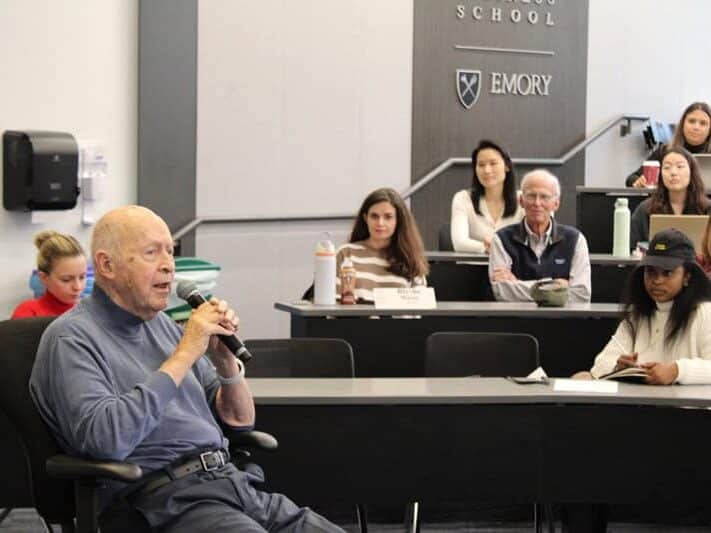
It’s not often a leader is willing to talk about his failures and missteps, but then Major General (Ret.) Perry M. Smith is not an ordinary class lecturer.
Since 1991, he has offered students at Emory’s Goizueta Business School a rare view of what it takes to lead in the military and in life. He has done this with remarkable storytelling skills, a sense of humor, and a frankness that has students in the Global Macroeconomics Perspectives classes, leaning in and wanting more.
“What I do with the students is tell them stories about the massive failures I’ve had in my career and in my life and what I learned from them,” Smith says. “I make the point that sometimes failure leads to success, and it also leads to humility, which is helpful.”
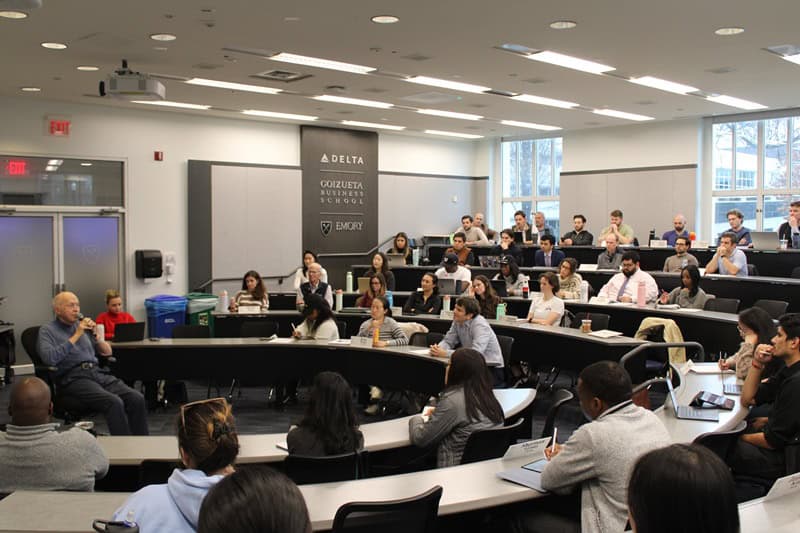
This February marked his 35th year teaching at Goizueta and at 91 years of age, there is no stopping this sage warrior.
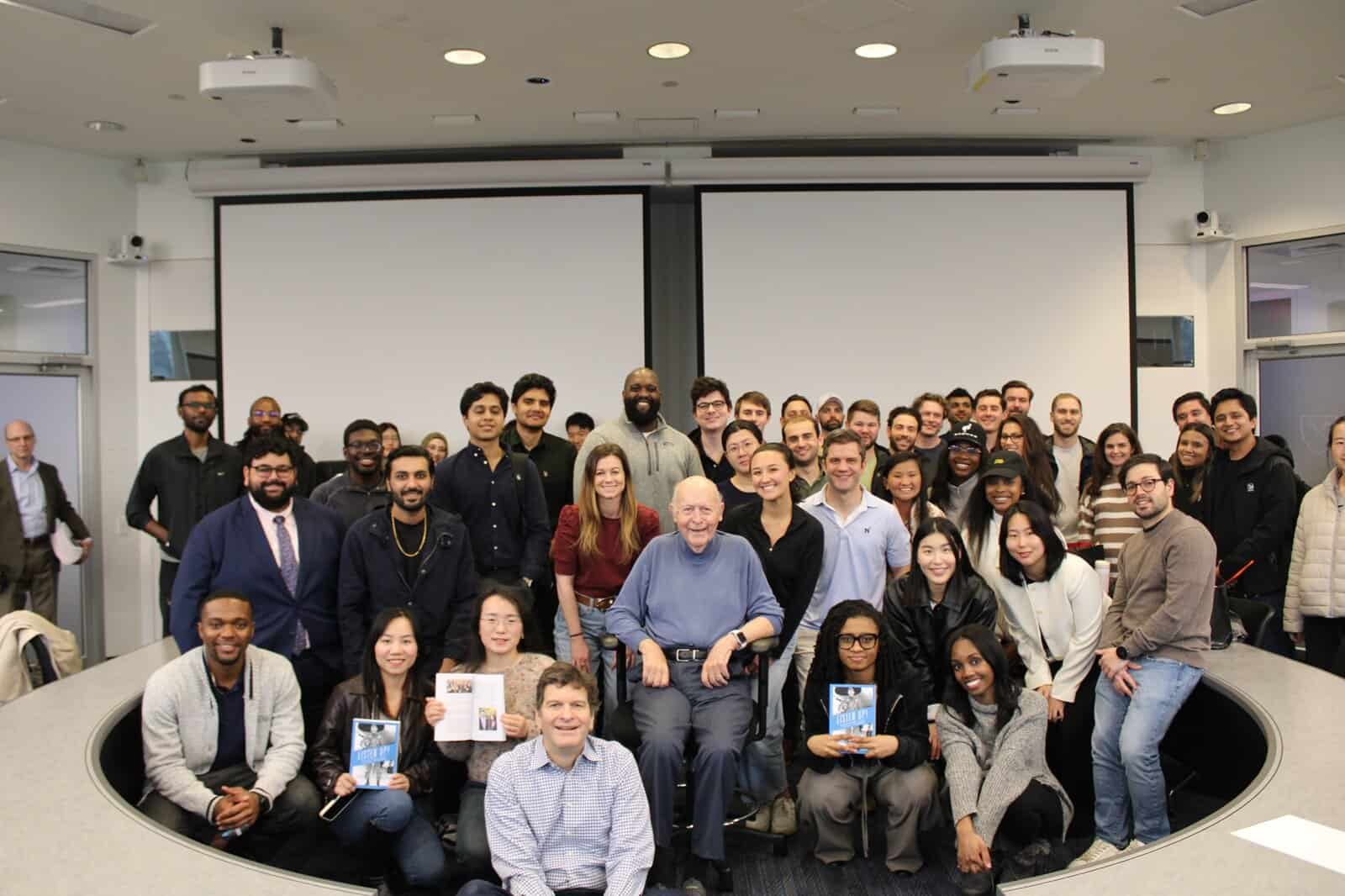
Even with a full agenda, Smith energized the 85 BBA and 82 MBA students he taught on February 26. Between the two classes, Smith addressed questions about service, leadership challenges, and navigating a constantly shifting geopolitical environment during an honors luncheon with MBA Veterans and hosted by Gerrod Gracia 26MBA.
“Each year, he tells me, ‘If I’m no longer relevant to the students, I’ll understand if it’s time to stop,’” says Jeff Rosensweig, associate professor of finance and director of The Robson Program for Business, Public Policy, and Government. “And every year, students urge me to bring him back. He gets a standing ovation every time.”
Rosensweig and Smith met backstage at CNN in 1991, when Rosensweig was a commentator, discussing the economic impact of The Persian Gulf War, and Smith, the network’s military analyst.
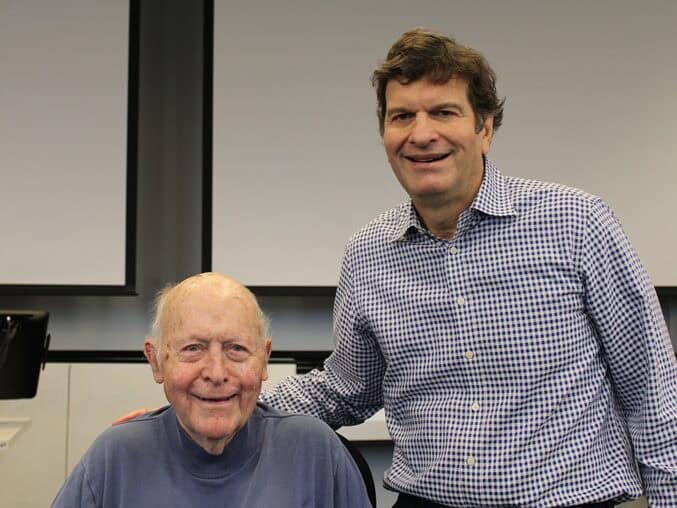
“We met there, and I thought, what a great communicator, what a great leader. He would really have some good lessons for my students,” Rosensweig recalls.
Smith was so well received by students that Rosensweig asked him back. Smith returns to campus three times a year to share insights on global leadership, leaving the bulk of his time to address students in a robust Q&A session.
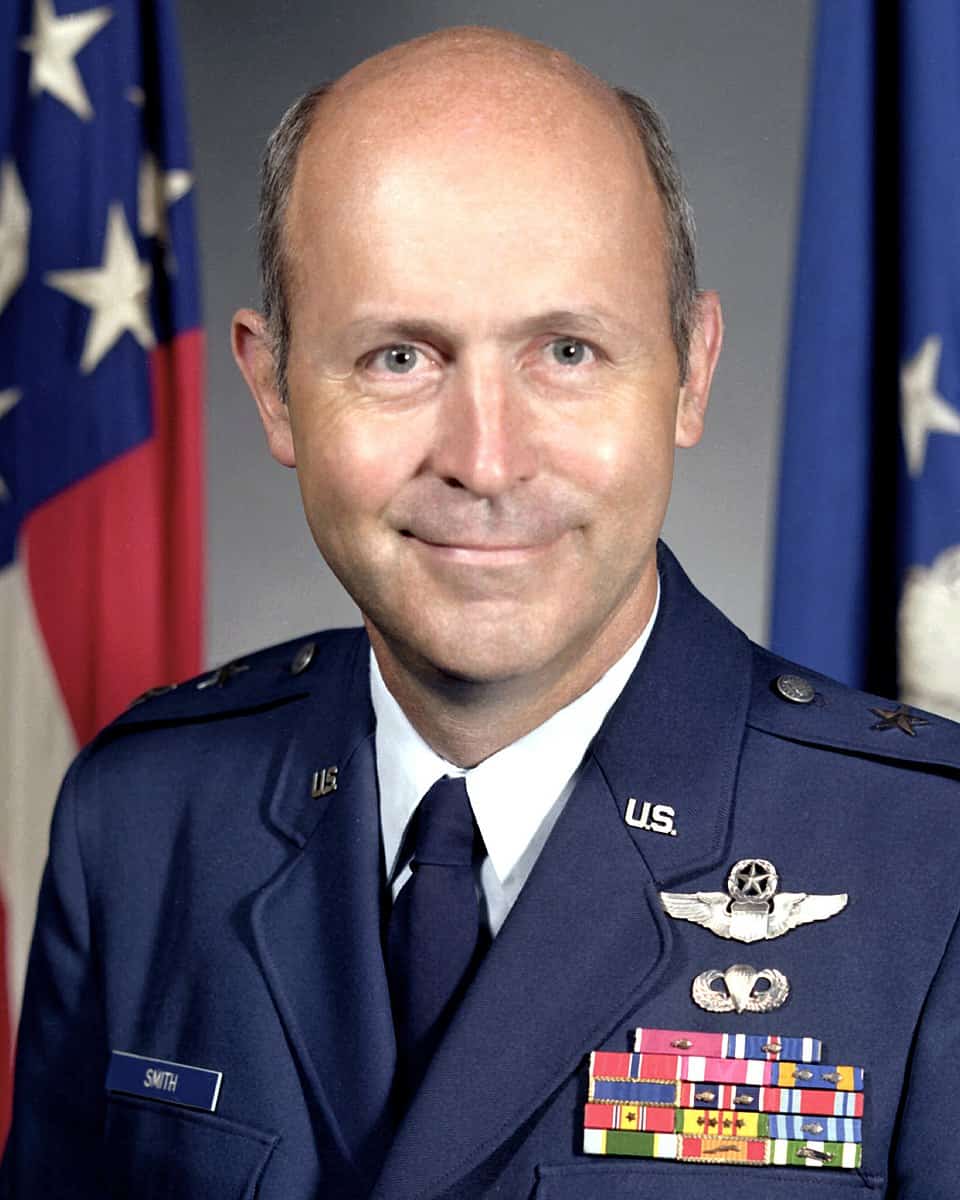
For Smith, his 30 years in the U.S. Air Force, including work at the Pentagon in Washington, D.C., is rich with lessons that are just as applicable today. His leadership experiences include serving as the top Air Force planner, as the commandant of the National War College, and flying 180 combat missions during the Vietnam War.
These experiences add emphasis to the lessons he shares with students.
Every year, students urge me to bring him back. He gets a standing ovation every time.
Jeff Rosensweig, Associate Professor of Finance
“First of all, I try to bring new insights into topics I’ve come across recently. Then I go into the details of what I think is the most important aspect of leadership, which is leverage,” Smith says. “Specifically, I share how the best leaders leverage their compassion, creativity, negotiation skills, and their reading skills.”
In terms of creativity, Smith says it’s vital to find creativity in others, generate ideas, then operationalize them. In short, get a person’s idea into a useful form, and run with it.
The role of compassion is equally important, notes Smith.
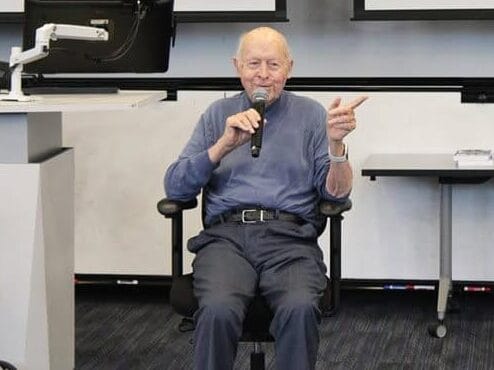
“When I was a leader overseas in Europe, I was in command of the F-15 fighter wing in Bitburg, Germany, and I had 4,000 people working for me,” he says. “I found out the young airmen who had only been in the service two or three years, were not sponsored. In other words, they arrived in Germany with their families, but we didn’t give them housing, we didn’t give them access to our hospital and all of that. And I said, ‘Wait a minute, what are you talking about?’”
“So, I waived all the rules and got them housing, got them access to the hospital and other things. That’s compassion. I really felt for them because they were living out of their cars and I did something about it.”
Smith also shares that his job in Germany came as a direct result of failure—getting “big time fired” from a prior role at the Pentagon.
I make the point that sometimes failure leads to success, and it also leads to humility, which is helpful.
Major General Perry Smith
“If I had not been fired, that job would not have come up. And it turns out that being fired turned out to be a badge of honor, because I got fired by a real bad guy and everybody knew he was a bad guy, so they thought I must be doing something right to get fired,” Smith says. “So, these things work out. The iron law of unexpected consequences.”
Smith is no stranger to riding out the tides of the unexpected.
A Childhood Shaped by History
At just six years old, Smith witnessed one of the most pivotal events of the 20th century.
“I was sitting in the back of an army truck on the way to Sunday school when the Japanese attacked Pearl Harbor,” he recalls. “It was a wild truck ride back to my home. My Mom was out on the front yard, and she gave me a big hug. She was happy to see me back home.”
Two months after the attack on the U.S. naval base near Honolulu, Smith’s family was evacuated from Hawaii.
“I was seven years old by this time. There were 2000 of us on a ship that only held 700, so the adults slept on the floor. We didn’t have enough lifeboats, which meant if you were over the age of 40, as my grandmother was, she would have gone down with the ship. They told you who got a seat on the lifeboat and who didn’t. I learned about the rationing of life that day.”
Smith also learned about tears of joy.
“When we pulled into San Francisco Harbor, it was a beautiful day. Everybody was up on deck and there were a lot of people to greet us. They were playing patriotic music, and I looked up, and everyone was weeping. I asked my Mom, why?
“I did not understand tears of joy.”
His father, a career military officer, quickly arranged for his family’s evacuation to Minnesota for safety. There, a teacher asked young Perry to share his experience with his classmates. That first speech sparked a lifelong passion for storytelling and teaching—one that has now lasted 84 years.
A Lifetime of Leadership
Smith would go on to attend the U.S. Military Academy at West Point and later earn a doctorate in International Relations from Columbia University. Tapping into his own creativity, Smith has published seven books on leadership and ethics and is known nationally as a thoughtful voice on public service and organizational responsibility.
Indeed, Smith has raised money for a number of causes, including the History Museum of Augusta, GA, where he lives, his church, the Medal of Honor Foundation, and, of course, Goizueta. He often leads fundraising campaigns and shares the importance of working with nonprofits and giving to worthy causes during his lectures.
“As we move along in careers, there are lots of opportunities to aid local causes in your area or in church, etc.,” he says. “When fundraising, one of my biggest takeaways is to ask big. If you think you are going to get $5K, then ask for $100K. I’ve used this strategy a number of times and I got $20K. Now if I’d asked for $5K, I would have gotten $5K. By asking big I do better than I hoped for.”
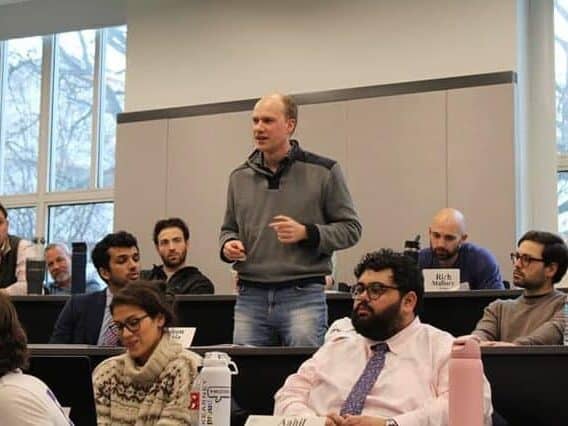
Smith was integral in helping influence the early military program at Goizueta.
“He organized things for students and has gotten people like Jack H. Jacobs to speak at Goizueta,” notes Rosensweig. Jacobs is a retired colonel in the U.S. Army and a Medal of Honor recipient for his actions during the Vietnam War.
“So, Perry has really been an anchor of a lot of what we did involving veterans, particularly before Ken Keen came, and we really built up the Master in Business for Veterans program,” notes Rosensweig. Lieutenant General (Ret) P. K. (Ken) Keen is associate professor emeritus in the practice of organization and management.
A Goizueta Tradition Since 1991
The elements Smith weaves into each session as he shares leadership lessons with students in the Executive MBA, Full-Time MBA, and undergraduate Bachelor of Business Administration (BBA) programs make his lectures a tradition. His sessions are known for their depth, humor, and unscripted energy. It’s common for Smith to speak for 30 minutes and then leave the bulk of time for questions.
“He often turns the class into a challenging Q&A,” notes Rosensweig. “He can field just about any question with clarity and wisdom.”
Clearly, the students agree.
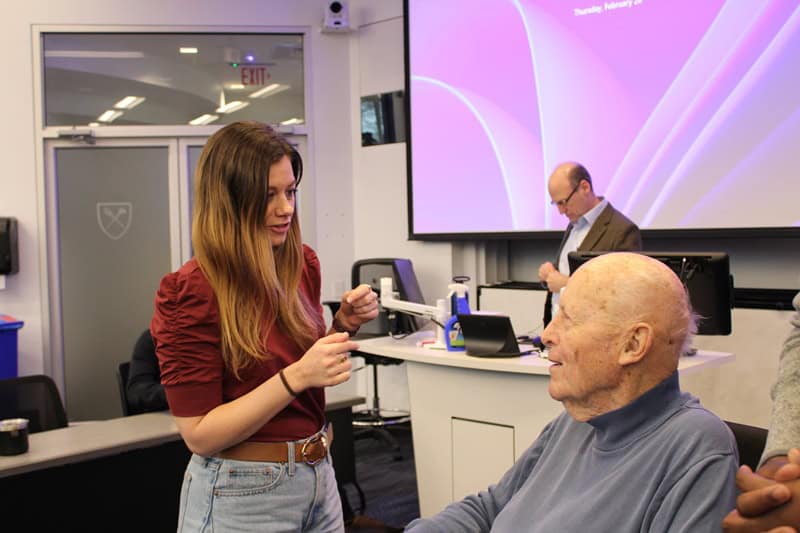
Gerrod Gracia 26MBA first heard Smith speak in the spring semester of 2025.
“What makes General Smith effective is that he combines deep experience with humility and clarity. He ties leadership lessons directly to real decisions, real consequences, and real people. That makes his talks feel less like lectures and more like conversations grounded in lived experience,” Gracia says.
The nuggets of wisdom he leaves with students, continue to be the hallmark of his lectures.
“One idea that really stayed with me was his advice to build an internal ‘brain trust,’” Gracia says. “He described it as a group of people you admire from different backgrounds, industries, and different ways of thinking who can serve as a personal sounding board. The value of having trusted voices you can consult when making decisions, navigating transitions, or facing difficult situations brings perspective and discipline to leadership.”
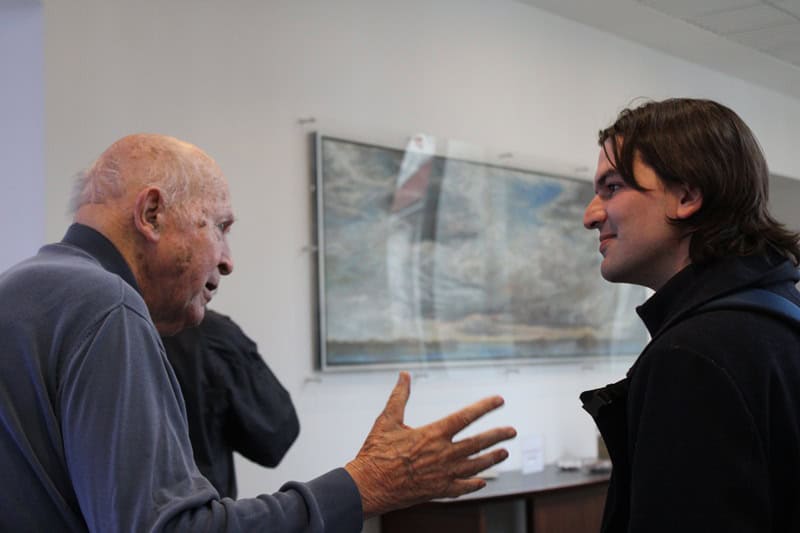
For Gracia, who upon graduation will join Perella Weinberg as an Investment Banking Associate in their Healthcare M&A group, the brain trust is a reminder that “leadership is not just about individual judgment, but about intentionally surrounding yourself with wisdom and accountability as you move through life and career.”
Smith’s commitment to Goizueta runs deep. Each year, he donates his books, Rules & Tools for Leaders and Listen Up! Stories of Pearl Harbor, Vietnam, the Pentagon, CNN and Beyond, to students in the Robson program. His granddaughter, Dyess Verfurth 18BBA/MPA, is a manager and product owner at Deloitte and a proud graduate of both the undergraduate BBA and Master of Professional Accounting programs at Goizueta—a legacy that continues across generations.
Still Inspiring, Decades Later
After thousands of students and 35 years of guest lectures, Smith shows no sign of slowing down. He continues to prepare, engage, and reflect—determined to remain relevant to every new generation that walks through Goizueta’s doors.
As he settles into another semester, Smith remains humble about his role.
“If I’m ever no longer needed, I’ll understand,” he says. “But as long as the students keep learning something from me—I’ll keep showing up.”